
Dense Forest Project
The Tropical Dense Forest project of “We for Environment” is a successful initiative that aims to create a self-sustainable dense forest with rich biodiversity of flora and fauna, restoration of degraded lands, environmental protection, water retention, and a clean and green future for coming generations. The project is based on the concept of Japanese botanist and ecologist, Akira Miyawaki’s dense forest, which resembles the forest that would exist in the absence of human activity and grows quickly with very good ecological resilience.
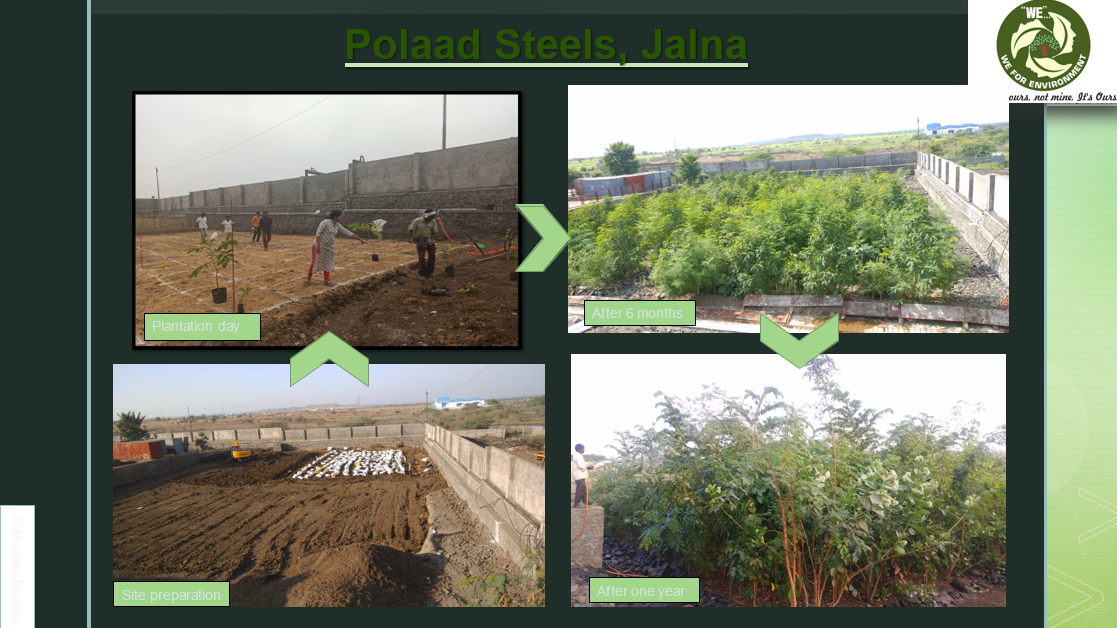
“We” judiciously selects native species in comparable geo-climatic context, systemically planted with proper sequence, patterns, ratio, and ingredients, which require minimum maintenance and become self-sustainable. This project plan includes the plantation of 900 trees of 30-40 different species in the area of 3000 square feet. The total market cost of the project is high, but “WE” has pioneered a low-cost module based on voluntary donations and self-induced contributions resulting in minimal costs for the project.
The normal cost of Rs 139 per square feet can be brought down to Rs 38 per square feet for the dense forest. The final cost for CII comes down to nearly 10 Rs/sqft, which is extremely reasonable provided the voluntary contributions are effected by both of us. We are eager to participate in the Green Mission by being worthy contributors to the Dense Forest Project and hope to make a significant impact on the environment and society.
Our Success Stories:
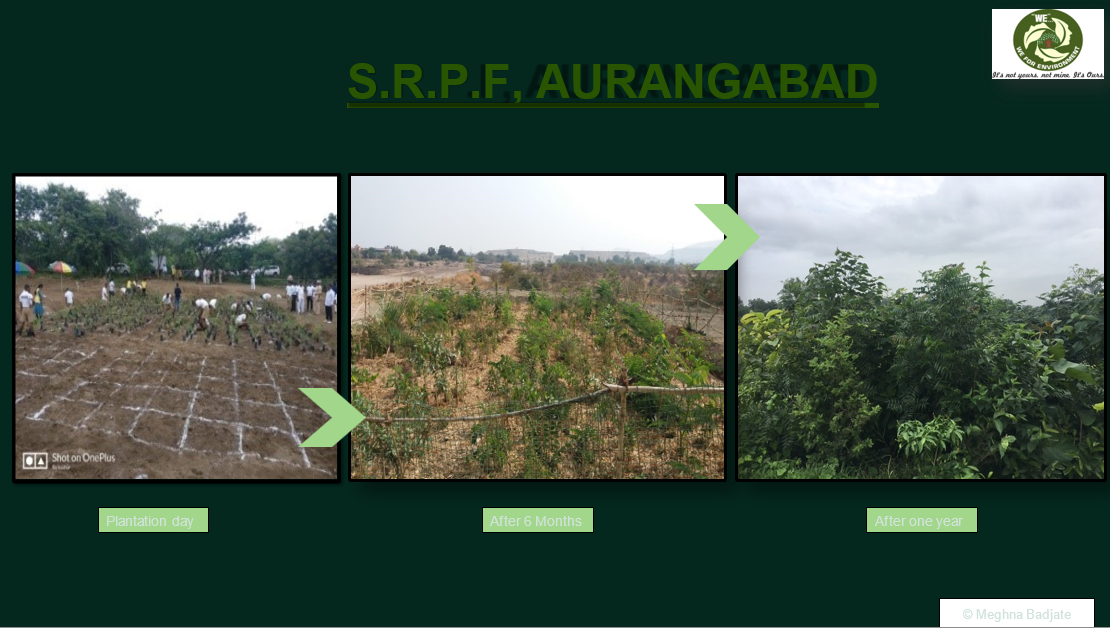
In August 2018, “We” collaborated with the State Reserve Police Force (SRPF) Battalion 14 to execute the Tropical Dense Forest Project in an area of 3000 square feet, planting 2700 trees through voluntary contributions and selfless efforts. The trees grew 10 feet in just six months, making it a major showcase of the NGO’s efforts.
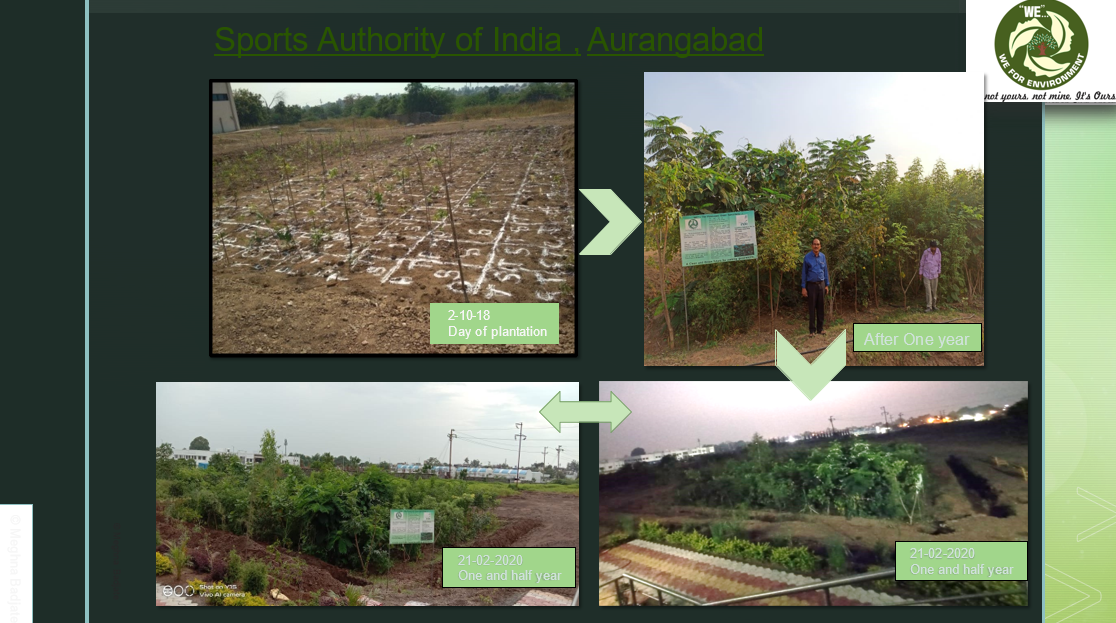
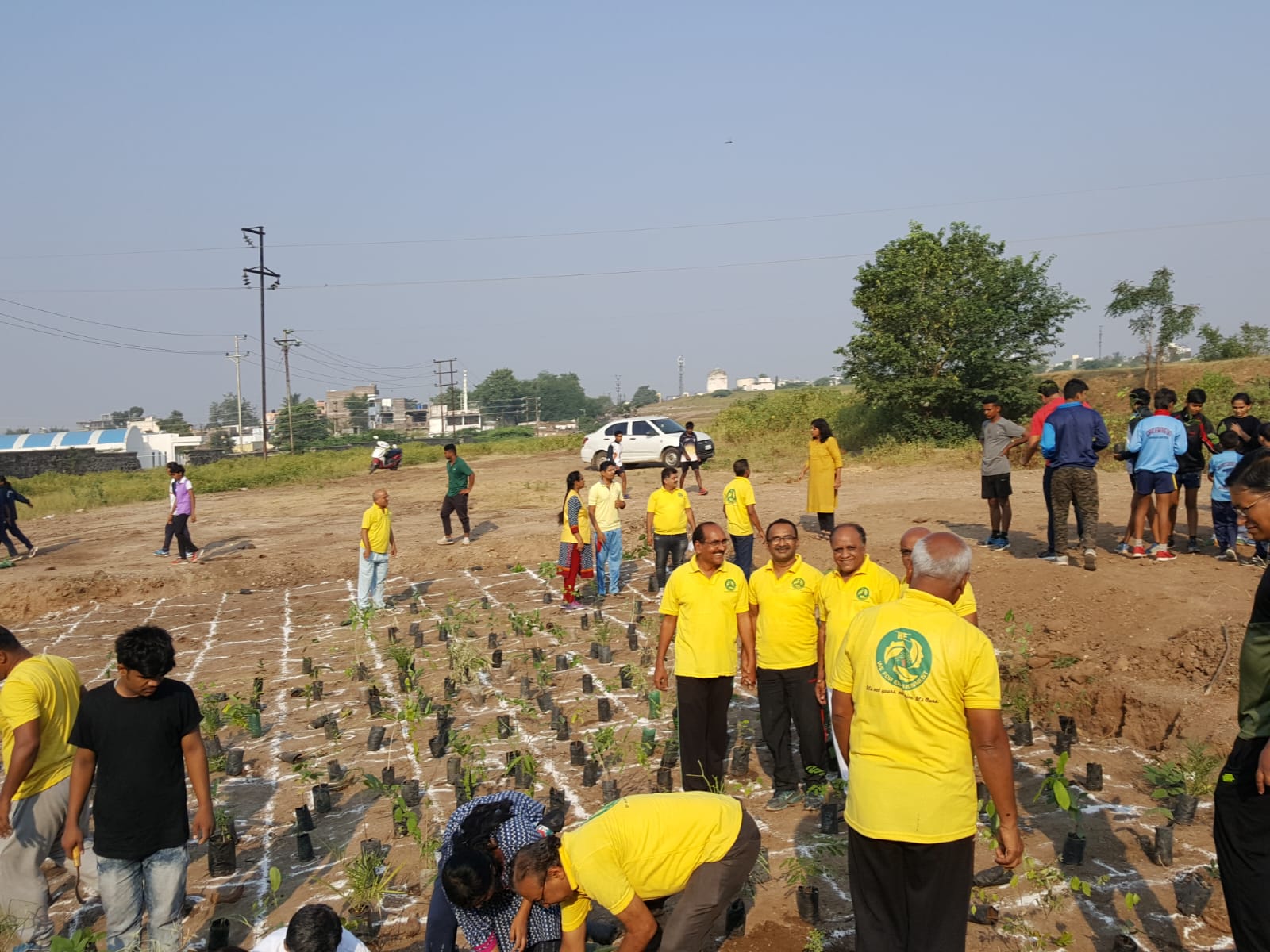
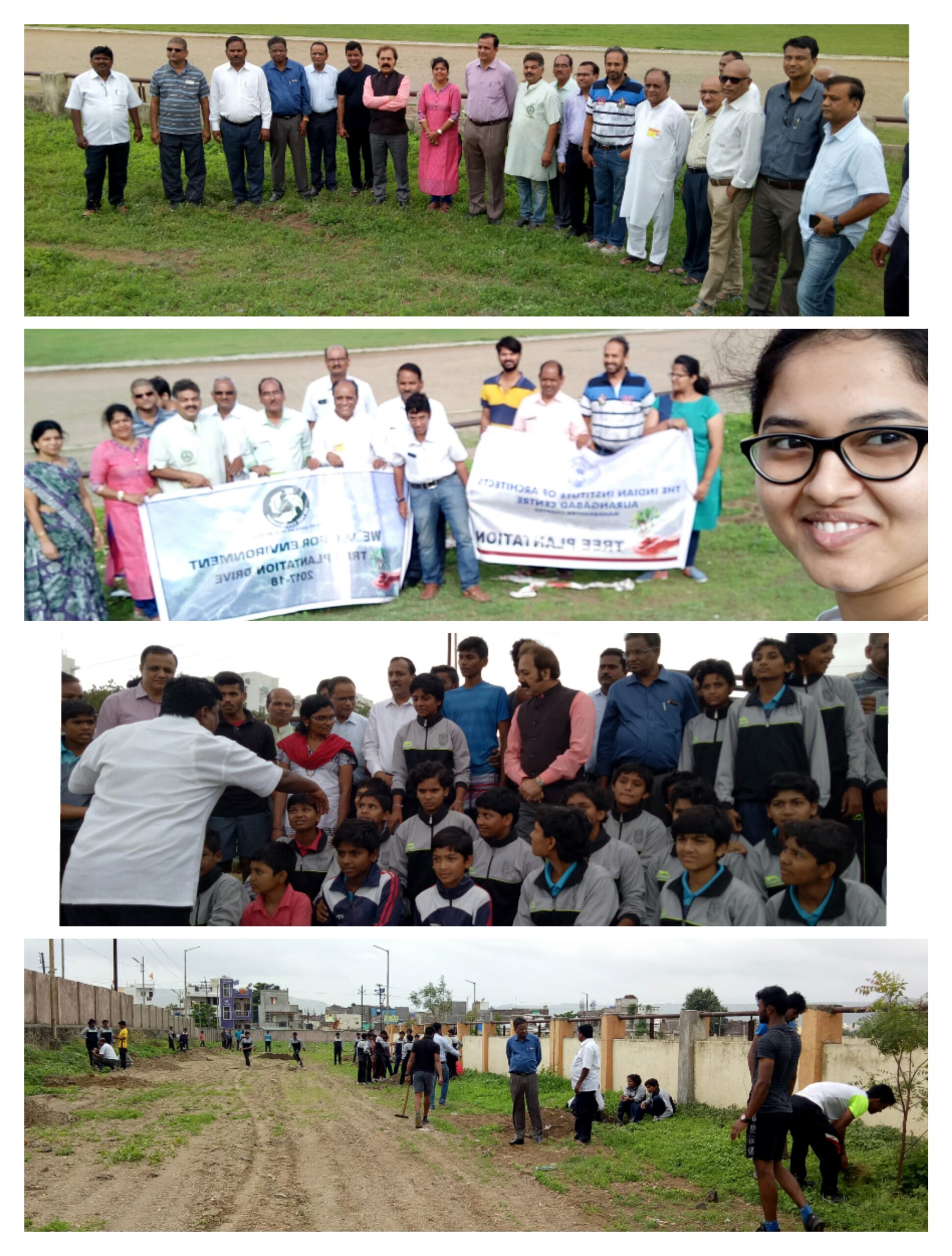
In October 2018, “We” joined hands with The Sports Authority of India (SAI) to plant 1000 trees in the same 3000 square feet area using 45 native varieties of trees. The area was prepared by digging one meter deep and covering it with a layer of rich humus and compost. The project used native ingredients and low-cost materials, as well as efficient and effective technology, with contributions made voluntarily.
Seed Banks
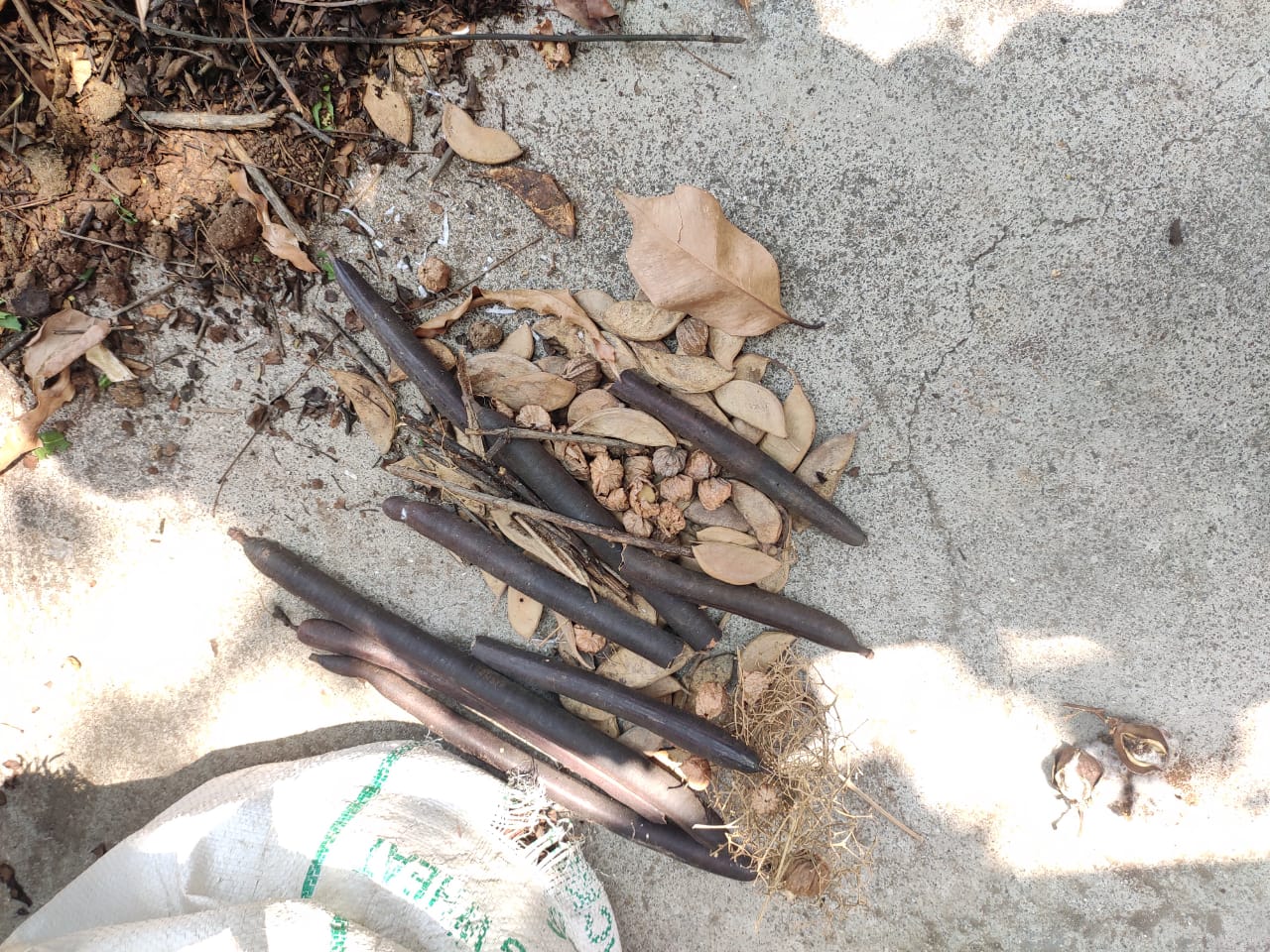
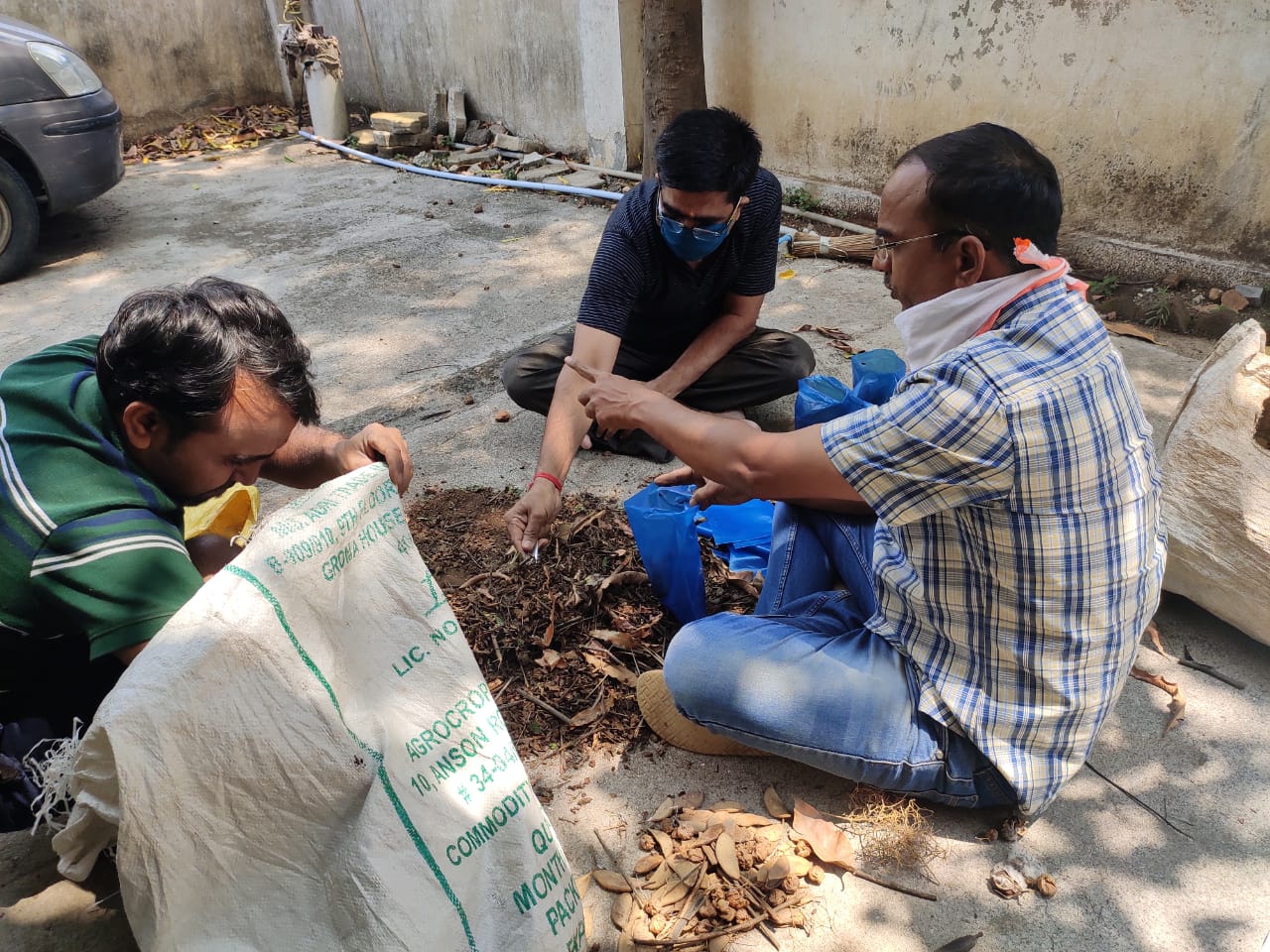
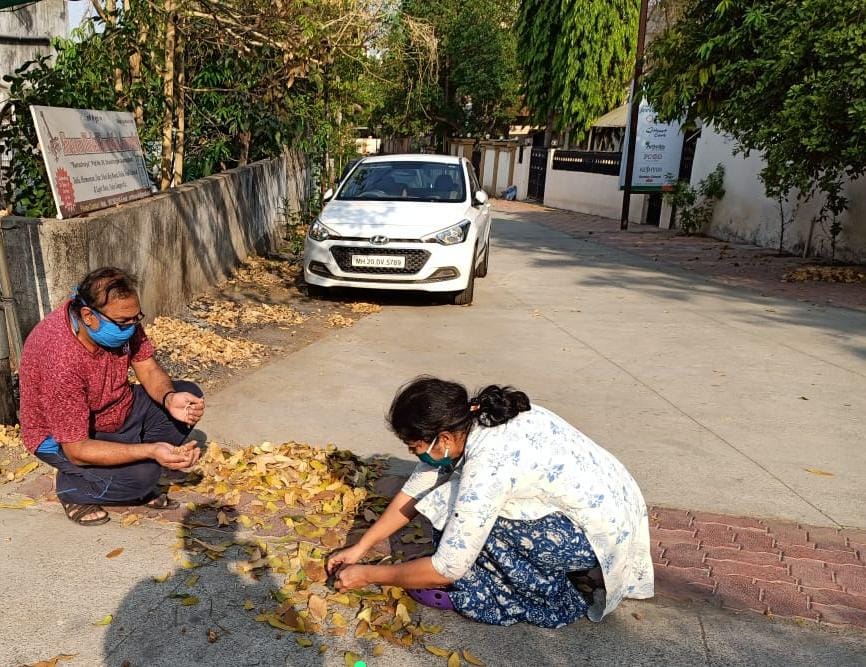
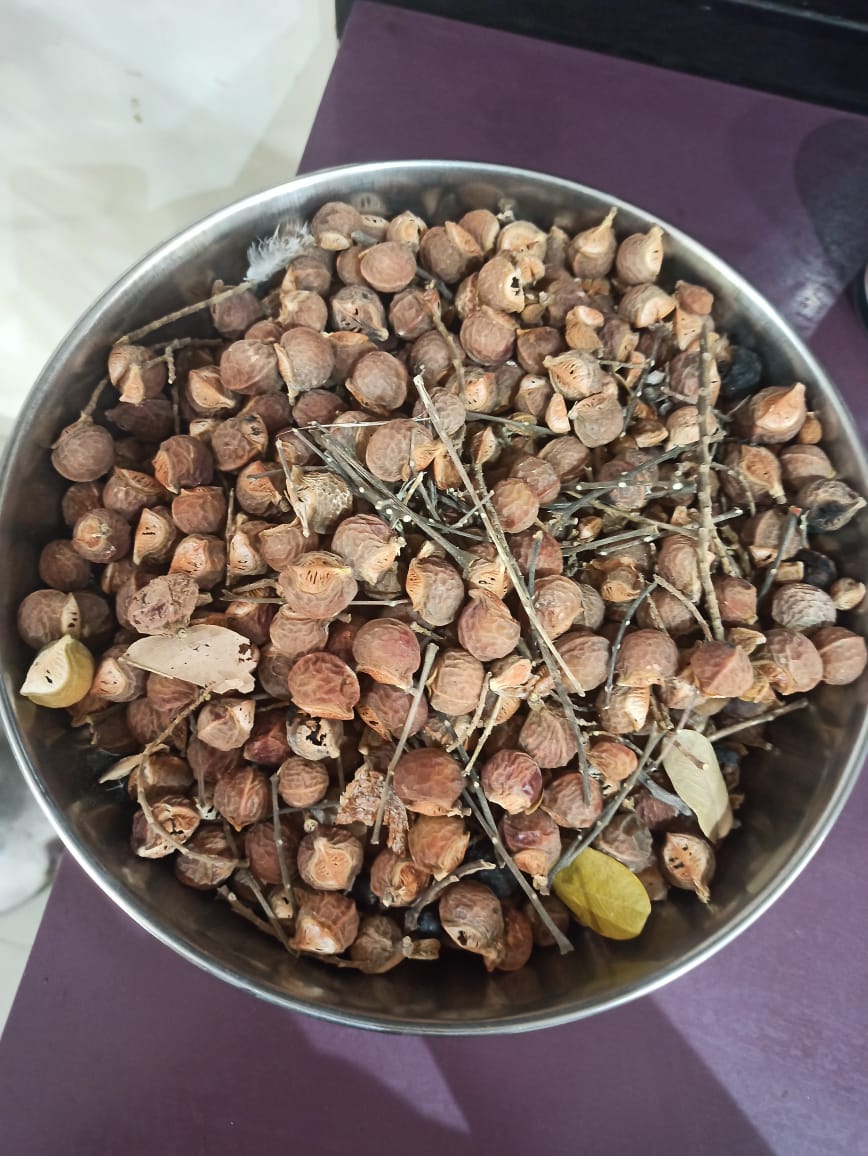
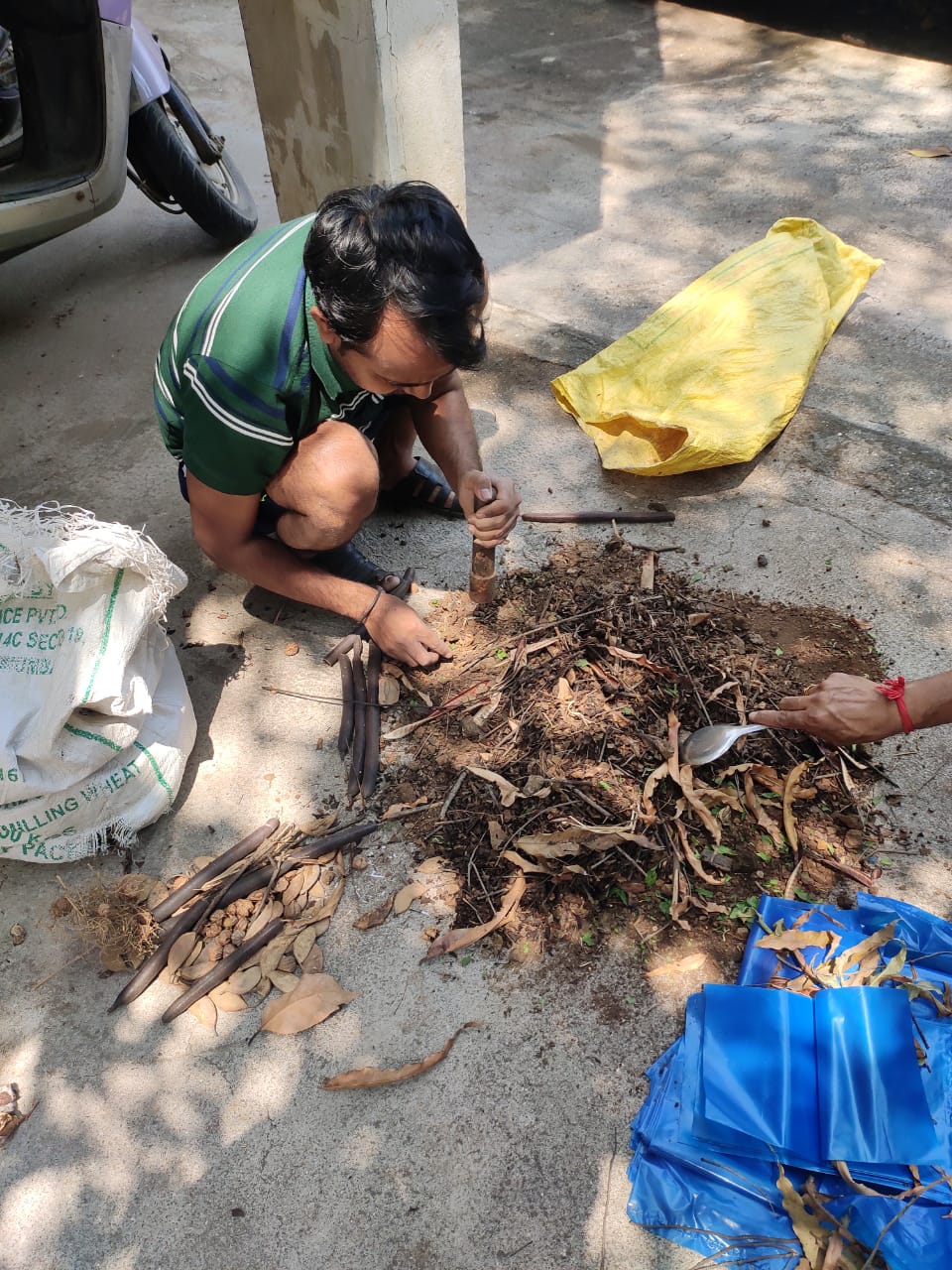
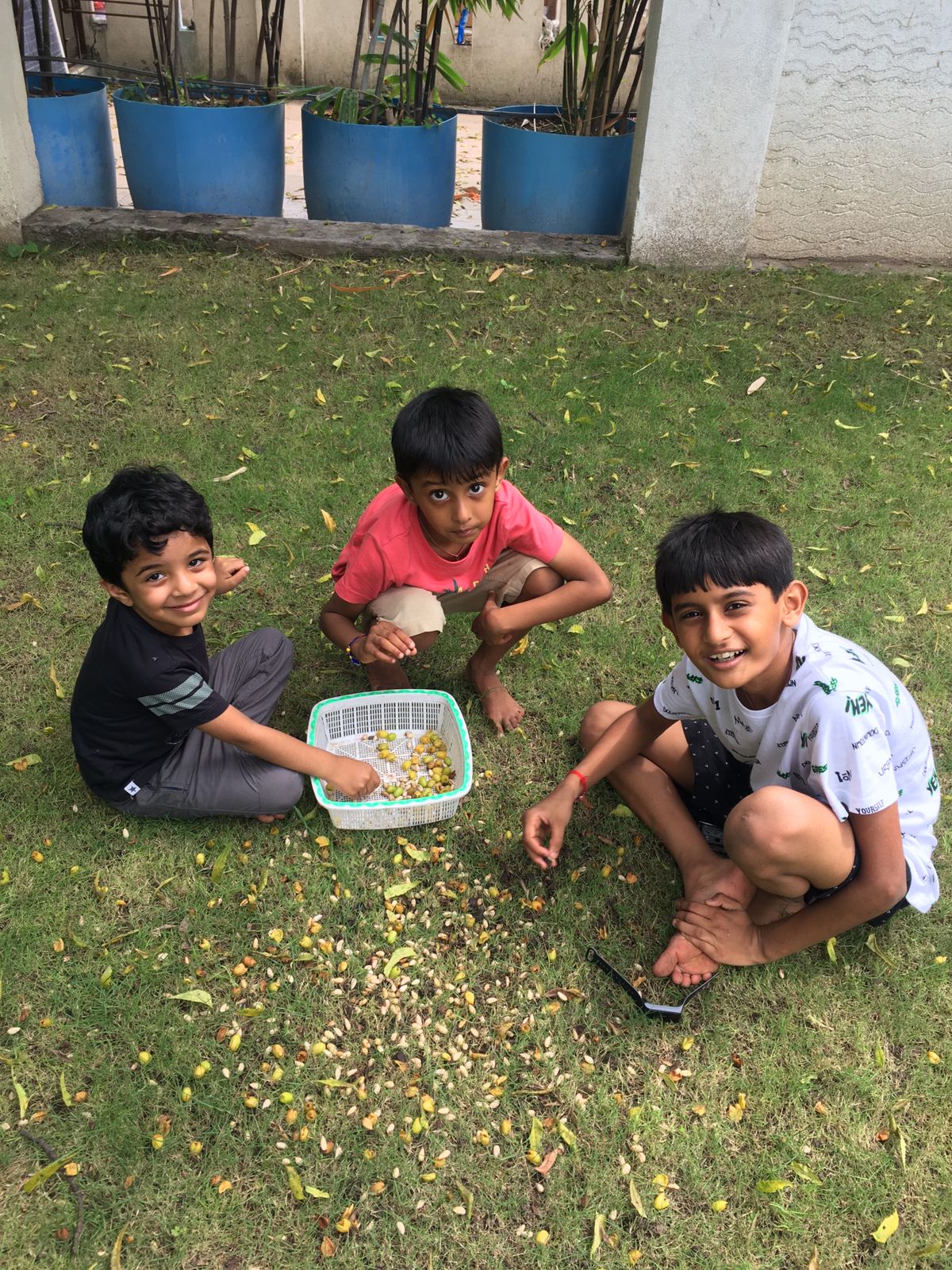
The members of the group have created seed banks wherein the members of the group visit the forest areas in the summer vacations and collected indigenous varieties of seeds. These seeds are then used by the group in the member nurseries for germination in to new saplings. Also the seeds are donated by the group to the schools under the school nursery yojana and the school going children for seed bombing and allied activities.
School Nursery
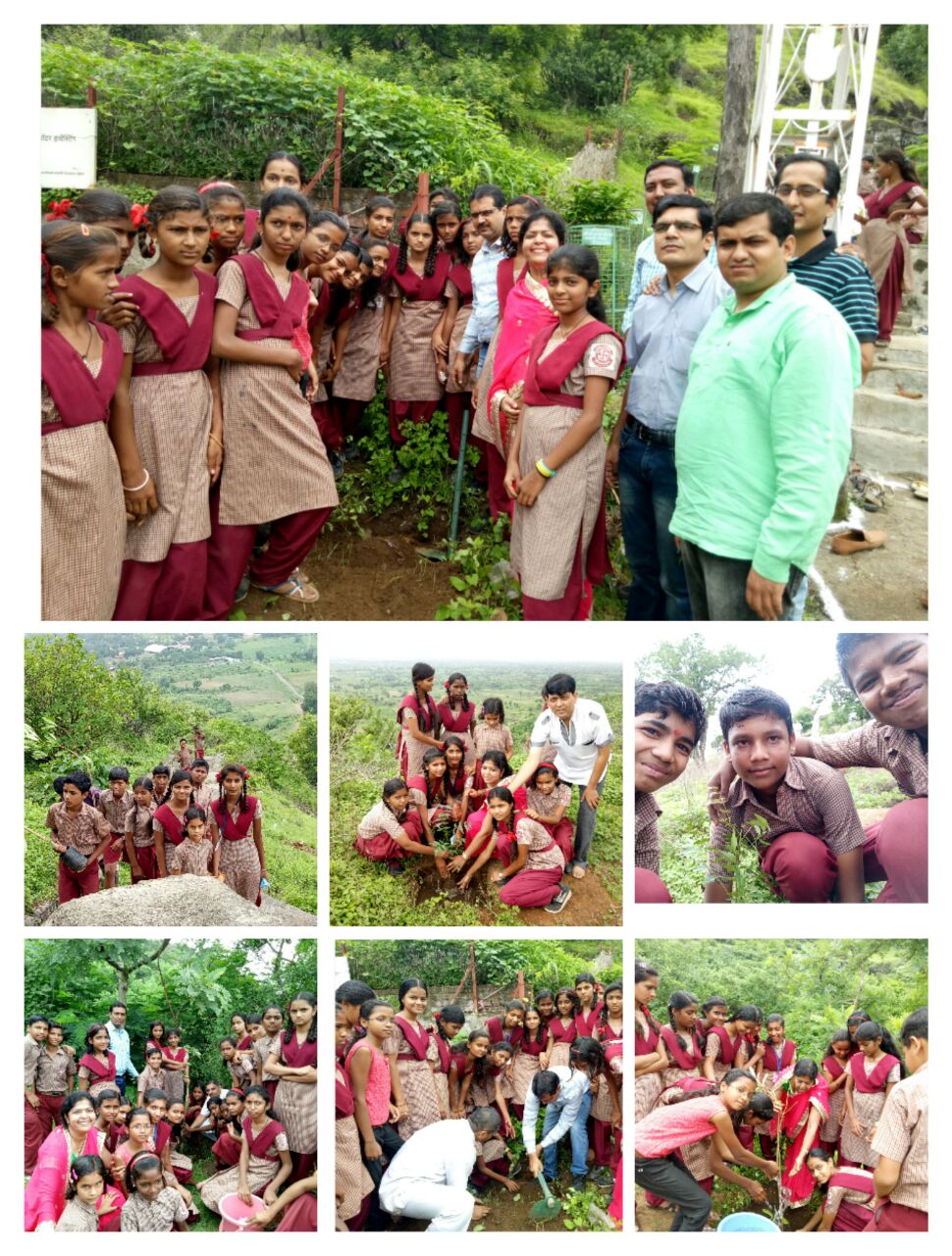
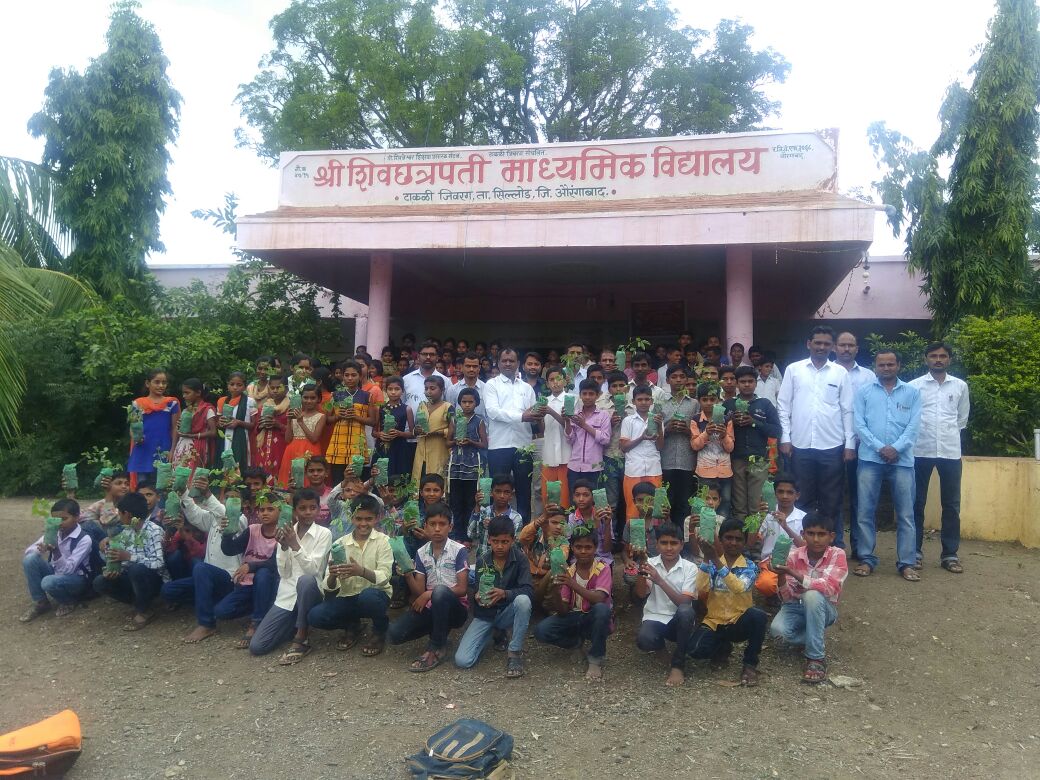
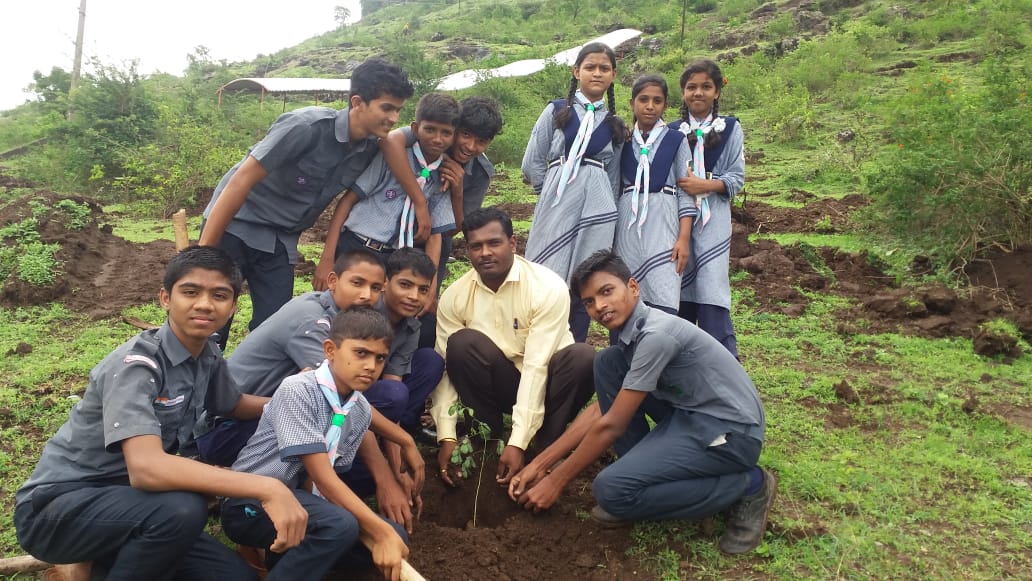
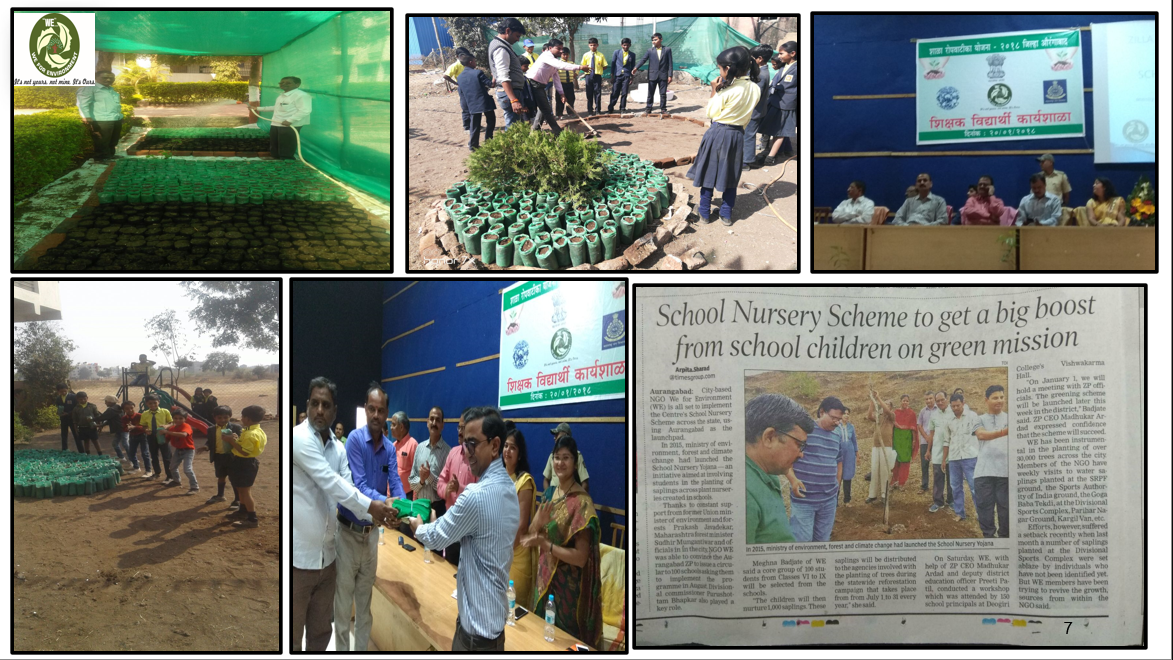
“WE” is a worthy contributor to the Pradhanmantri School nursery Yojana project undertaken for the first time in the Aurangabad district of the Maharashtra State. The NGO has provided the Polythene bags and seeds to the Schools for creation of the School level nurseries. Every child in the school is given the ownership of the tree along with the teachers and school administration. The schools maintain the nurseris for the entire year and in the rainy season the trees are planted in the nearby premises. This scheme has been successfully implemented in nearly 150 schools on Aurangabad district.
Home Nurseries
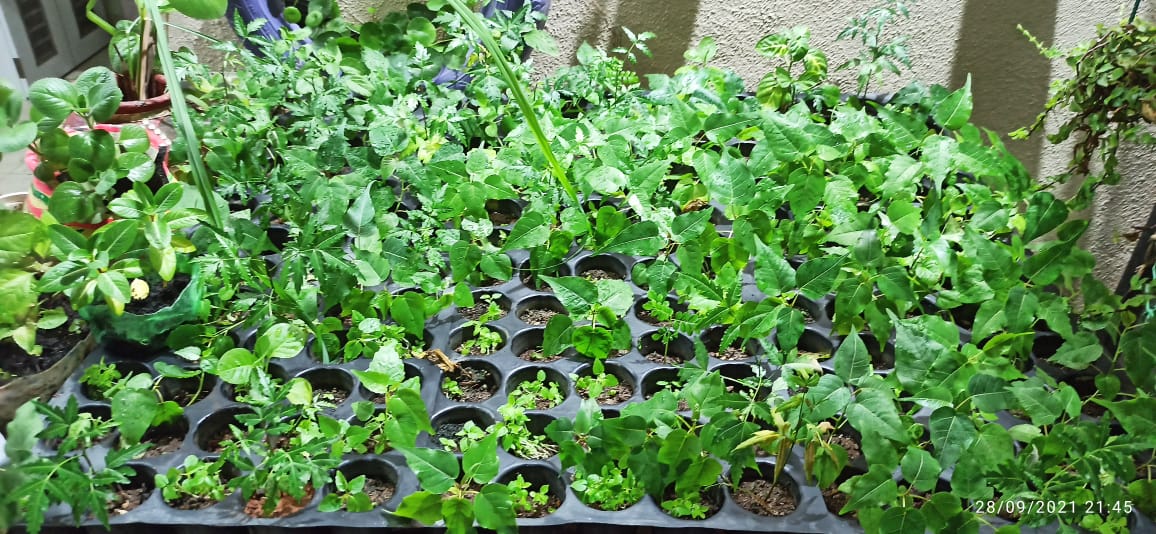
As an NGO, our successful initiative for promoting home nurseries has been to provide training and resources to interested individuals and communities. Through workshops and online tutorials, we teach people how to create and maintain their own home nurseries, even with limited space or resources. We also provide seeds, soil, and other necessary supplies to get started. By promoting the benefits of home gardening, including improved health and wellbeing and reduced environmental impact, we hope to encourage more people to create their own green spaces and contribute to a healthier planet.
Plant Trees Online
“We” is also contemplating a concept of Plant a Tree Online, wherein one can donate the expenses of the tree and We would plant and nurture the trees till it grows fully. The coordinates of the planted trees along with the pictures of the present status would be shared with the donor from time to time.

Member Nurseries
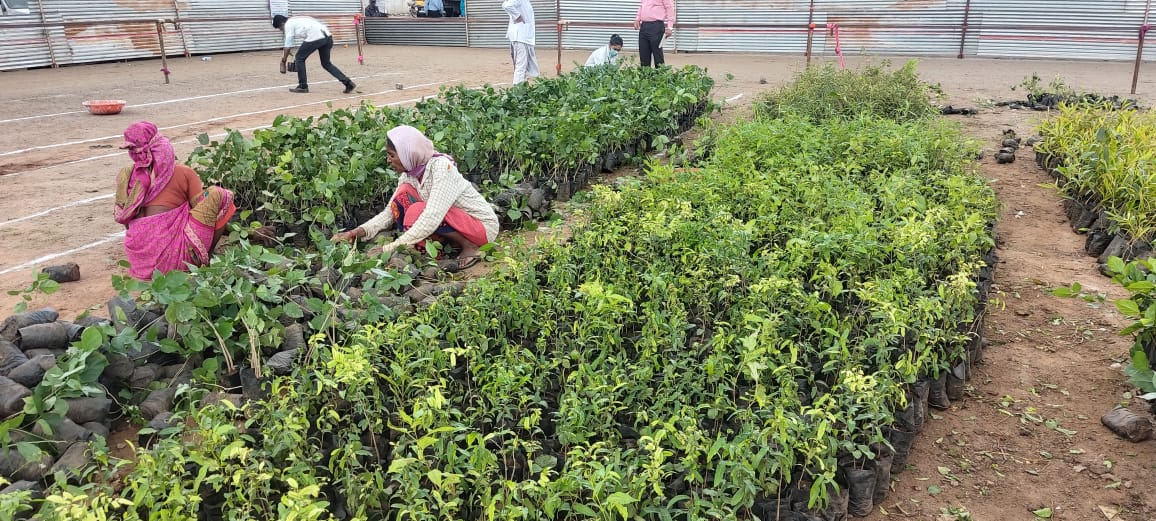
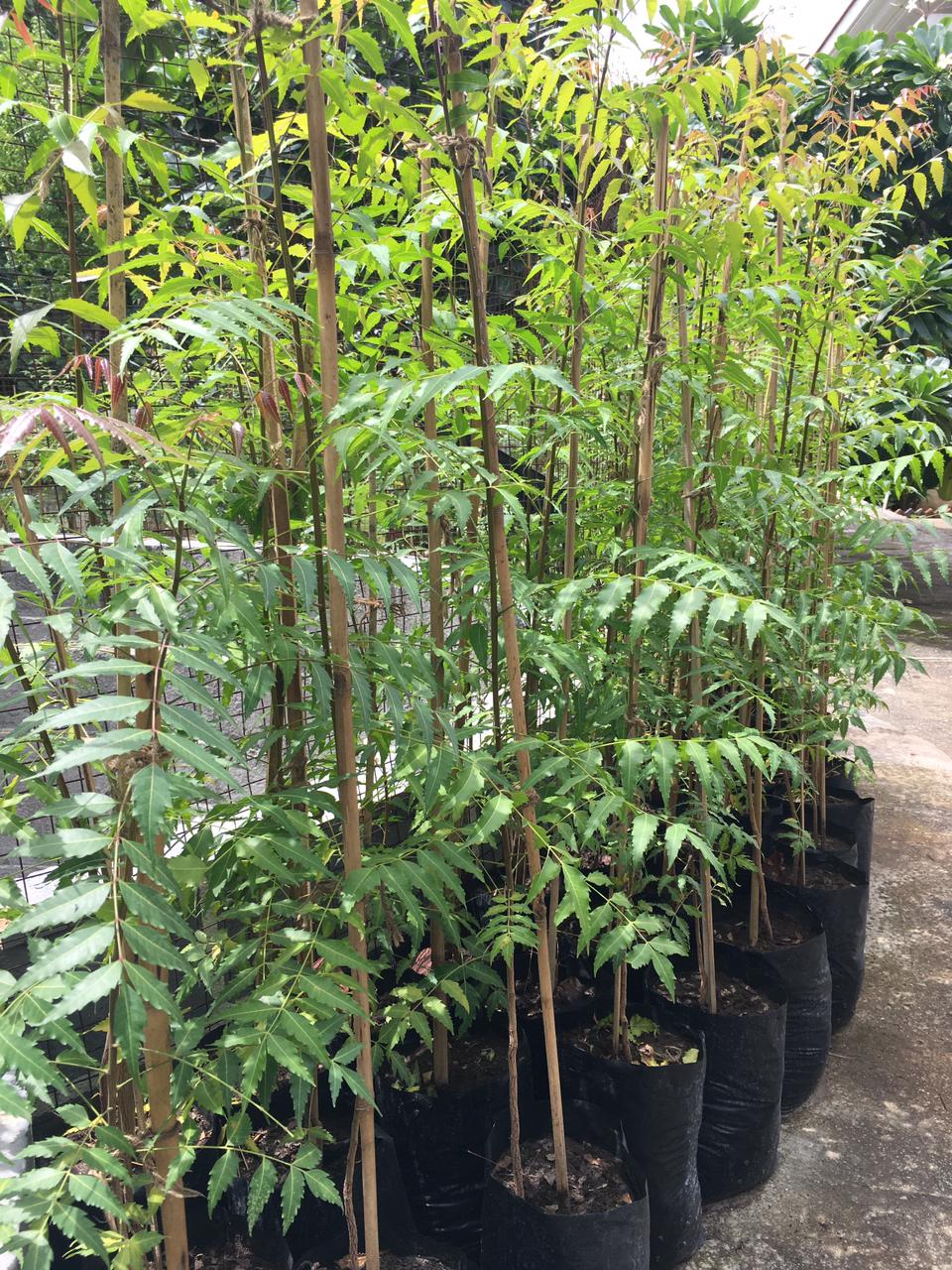
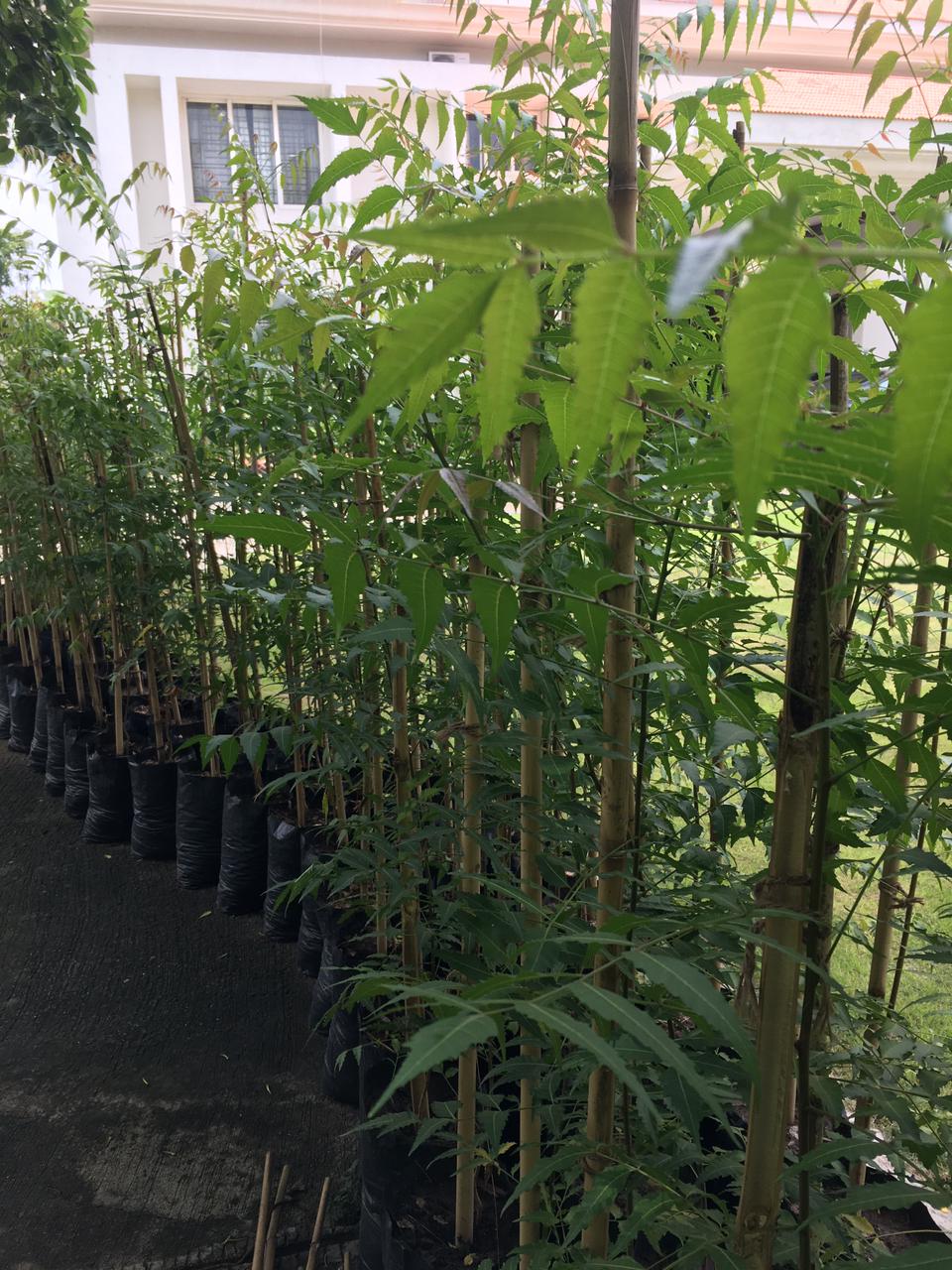
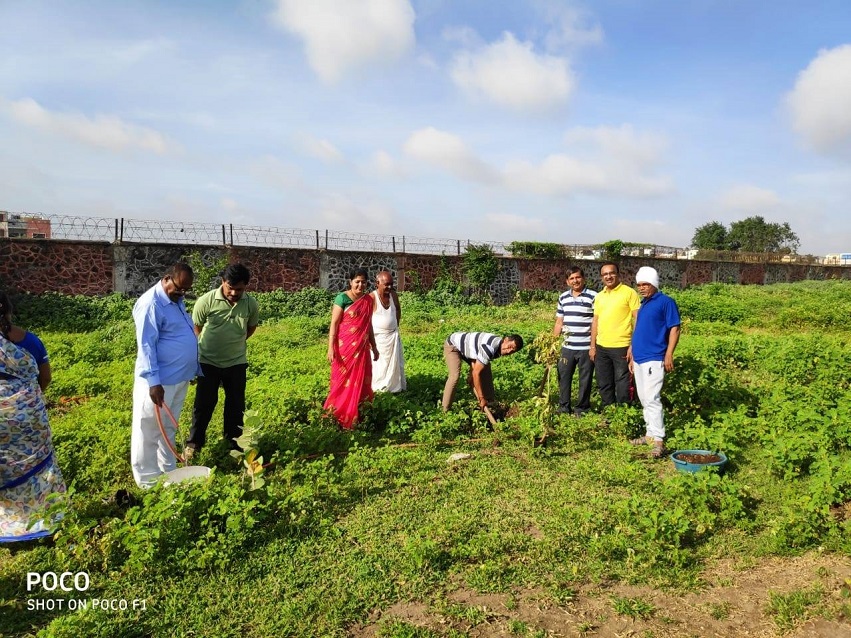
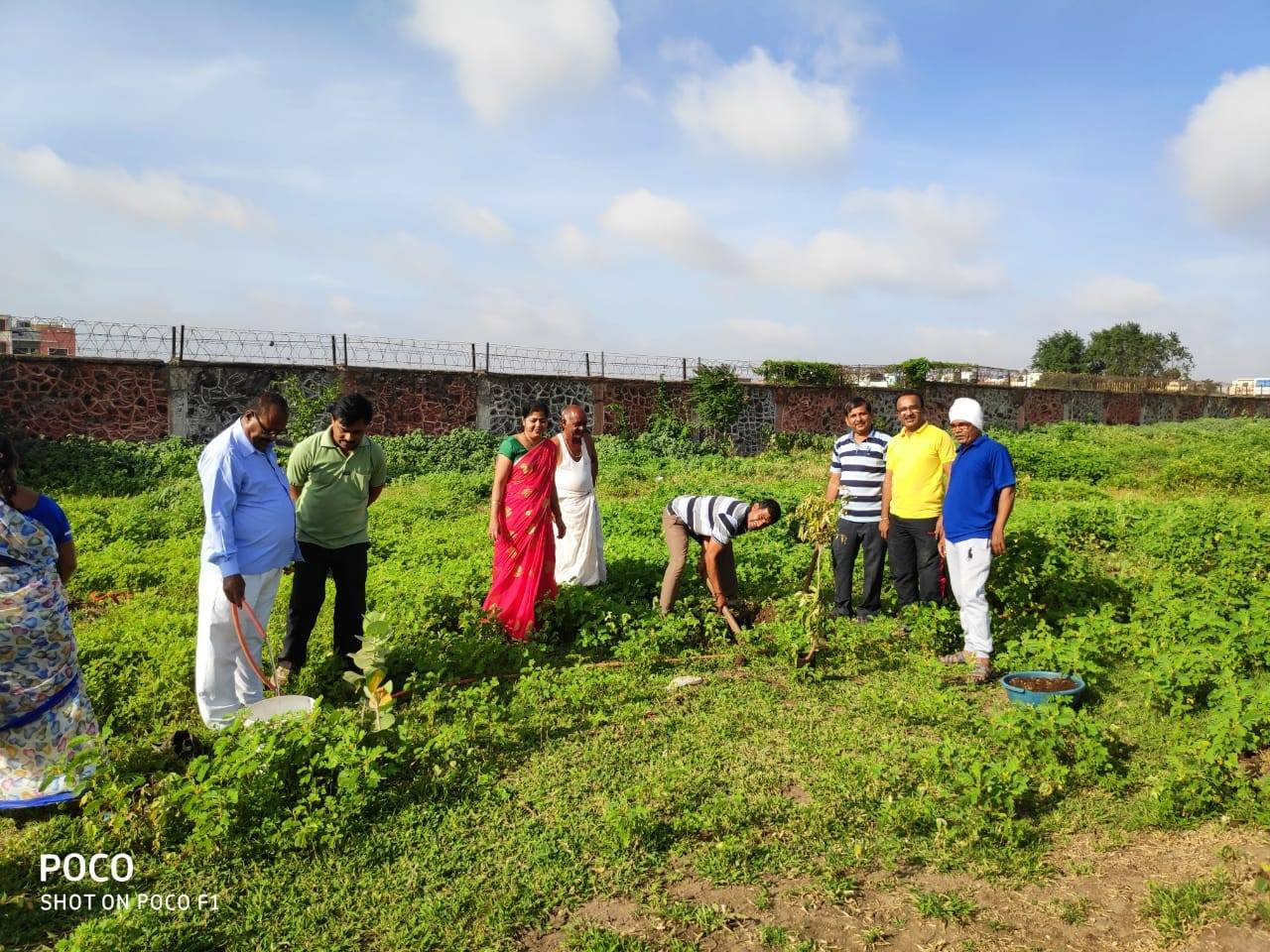
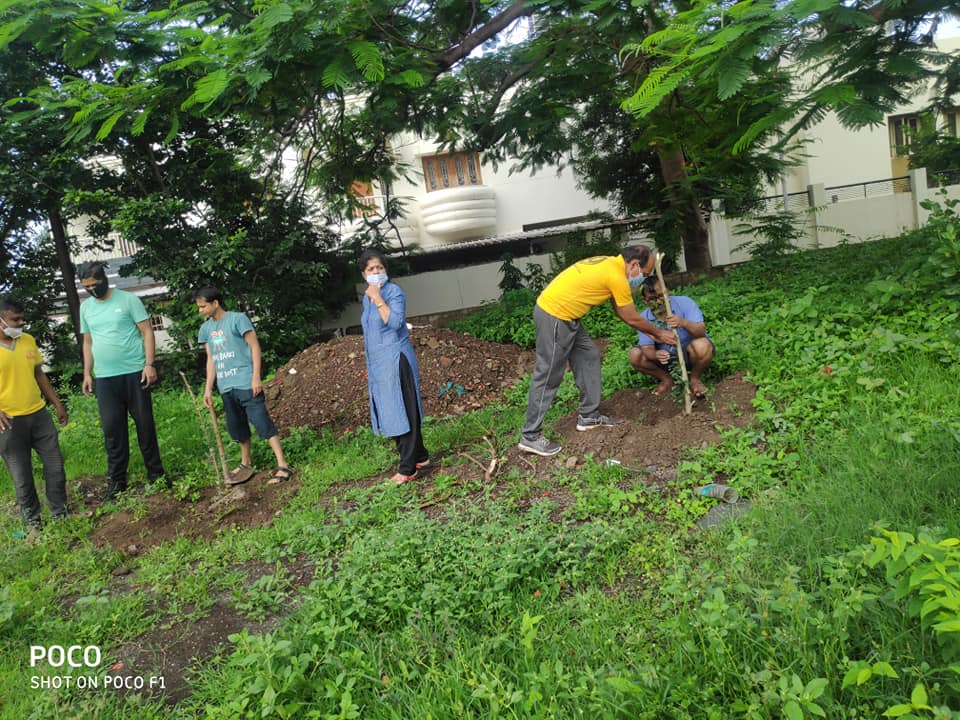
The members of the group have voluntarily consented to use the vacant spaces in their residence, factories and commercial premises for creation of group nurseries. Prominent members like Shri Ravi Divekar (Divekar Auto) has facilitated the group by voluntarily creating the nursery in the workshop premises. These 2000 saplings are nurtured round the year till the next season and are planned to be used for Monsoon plantation drives.
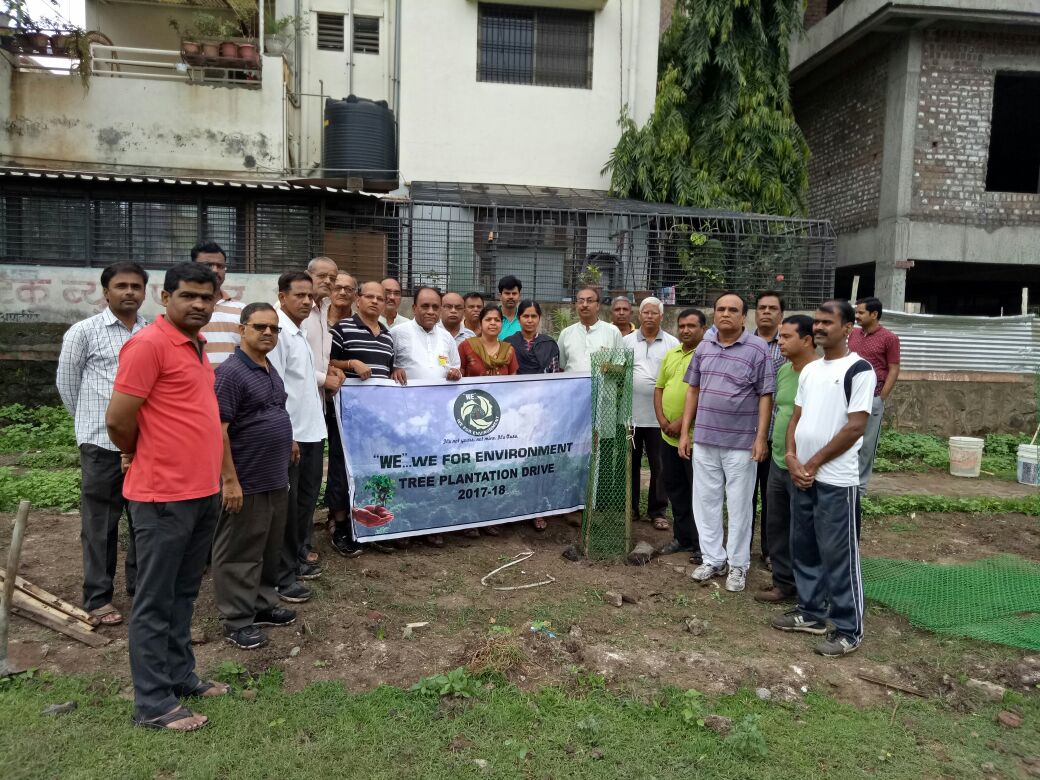
Tree Plantation Drive
o Kamal Model:
This model has been evolved by Shri Kamal Kumar Pahade [Renowned industrialist & Hon VP of “WE”…We for Environment] and is projected as “Kamal Model “of Tree Plantation.
The Kamal Model has been proven to be successful in promoting tree growth and sustainability with minimal water requirements.
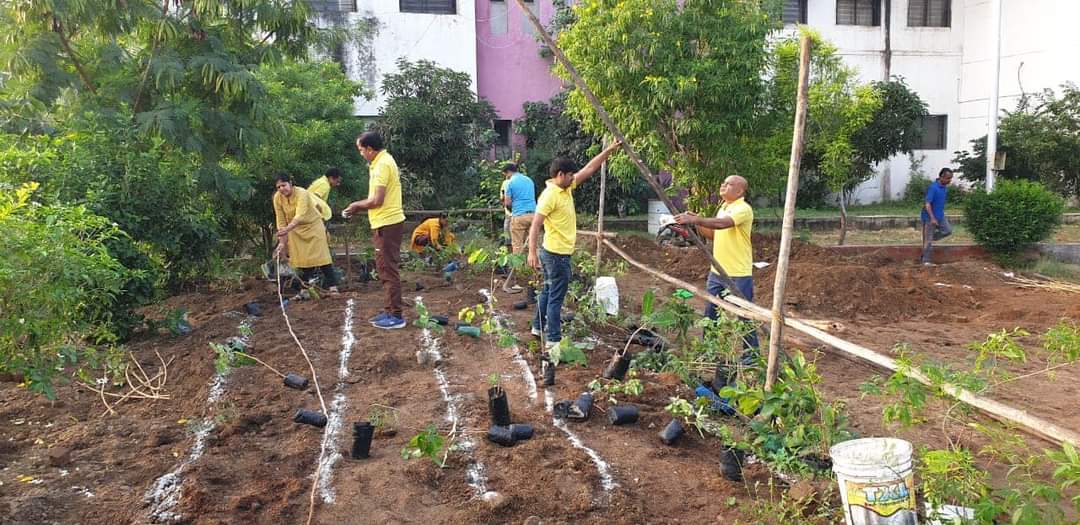
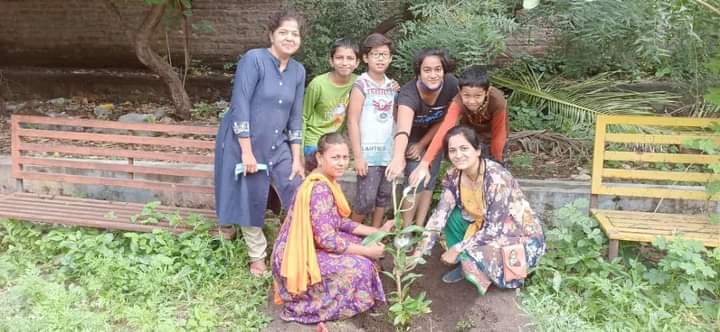
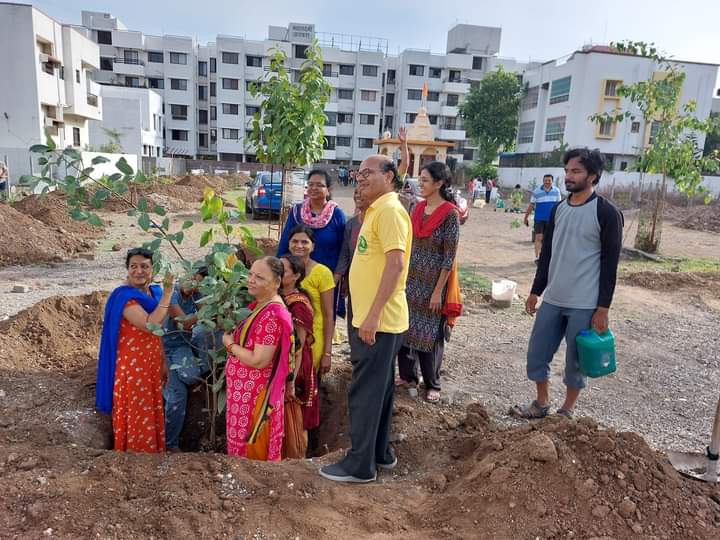
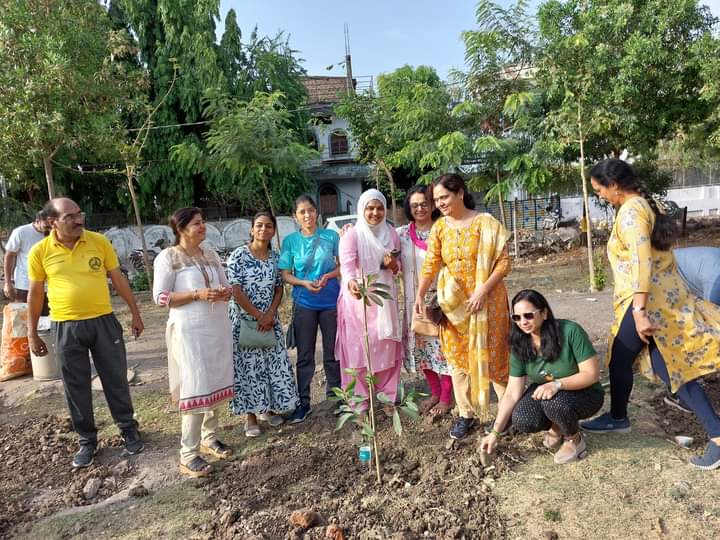
The Kamal Model of Tree Plantation involves the following steps:
- Dig a pit of 1.5ft X 1.5ft X 1.5ft (depth can be 1ft for small trees).
- Place a bottom layer of 12-15 coconut husks in the pit. Coconut husk retains water and reduces the need for frequent watering.
- Place the tree at the center of the pit and provide a standing bamboo stick for support.
- Add a thin layer of compost or manure.
- Use two waste plastic water bottles (1 or 2 litres) for direct drip watering to the roots. Cut the bottom of the bottles and remove the cap. Invert the bottles and place them diagonally opposite in an east-west direction. This method can save up to 60% of water compared to direct surface watering.
Colony Plantation
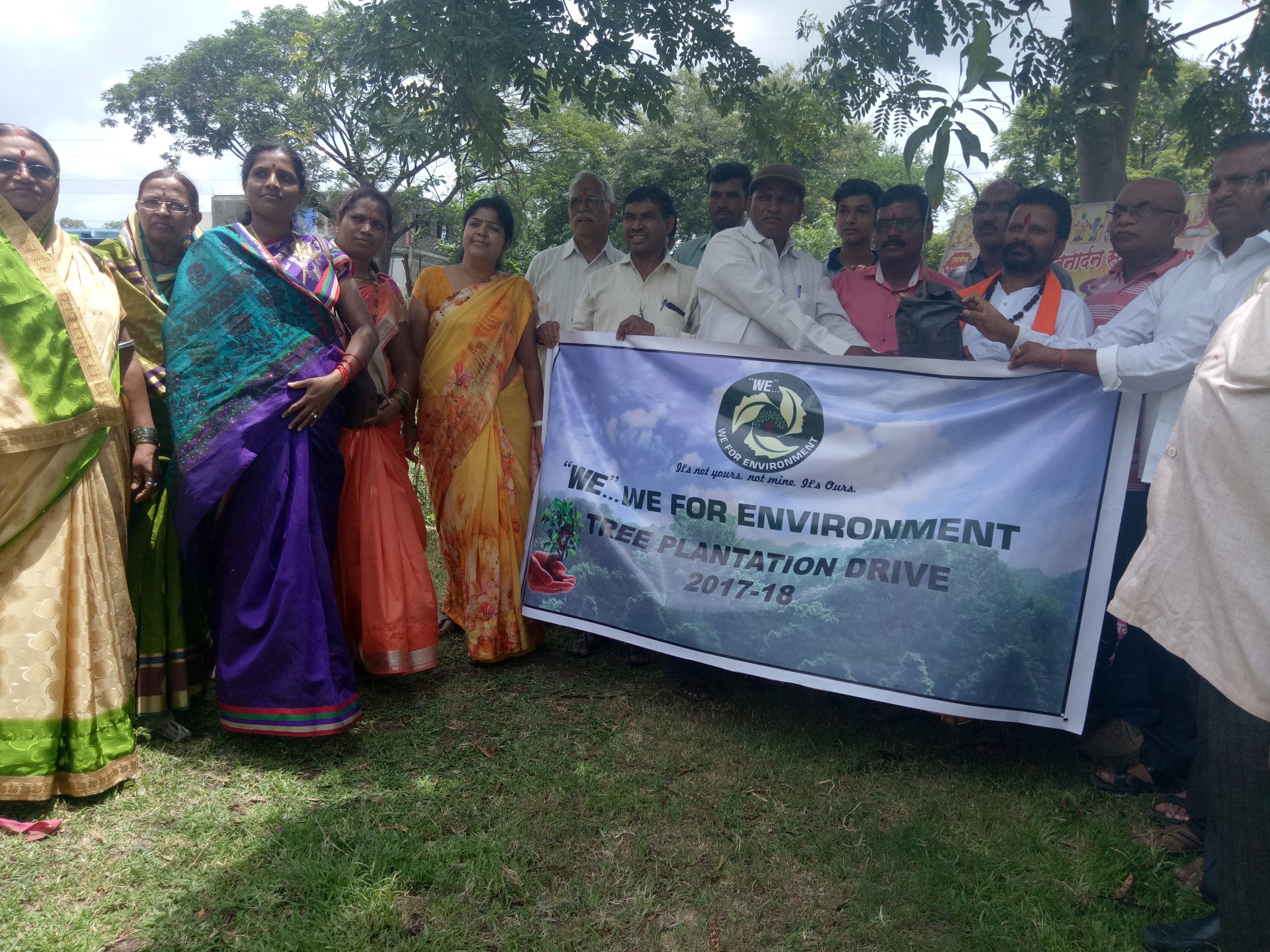
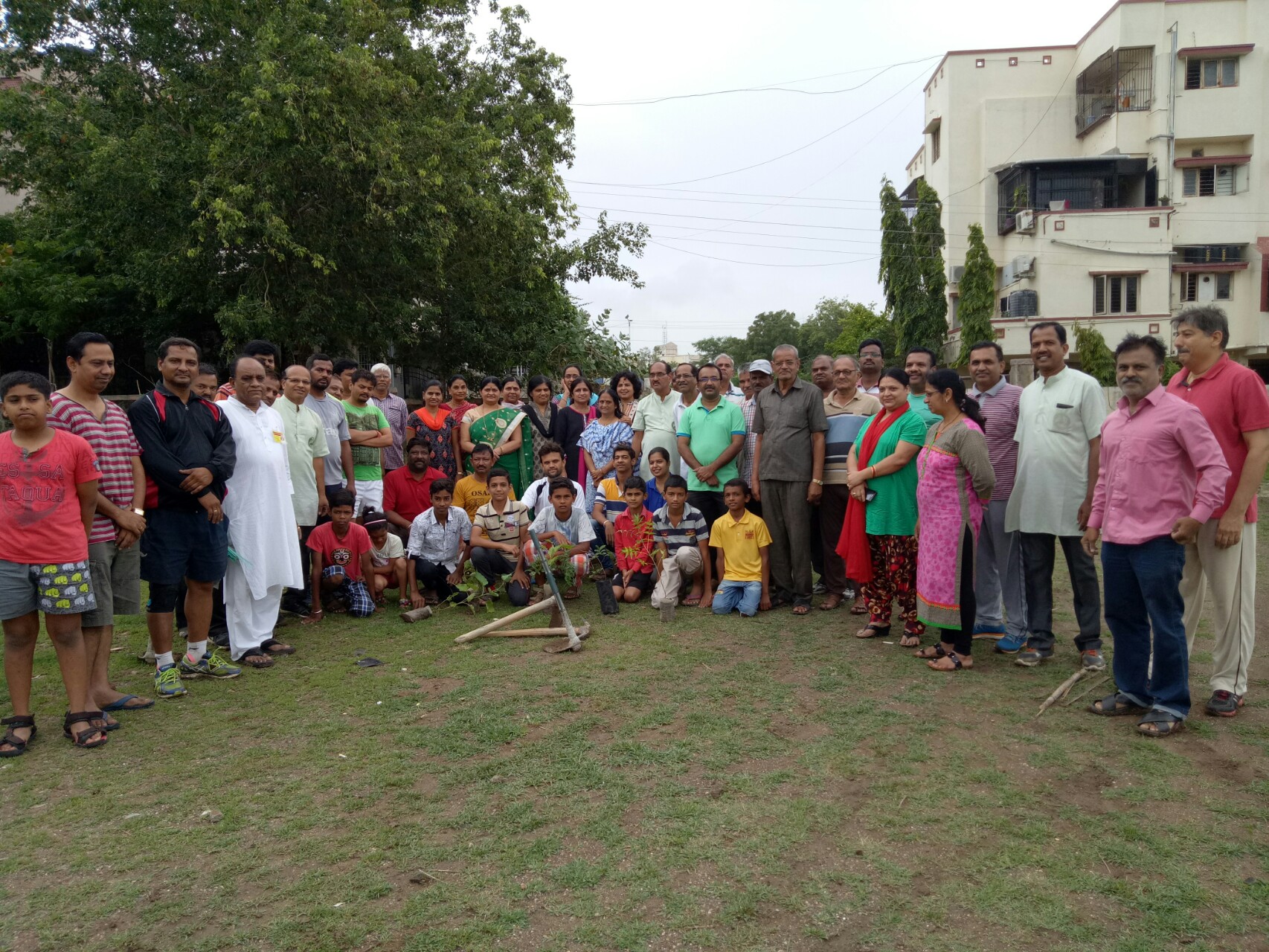
Colony Plantation: The NGO encourages colony level plantation by creation of colony level environment groups. These groups are encouraged to meet and discuss among themselves about the proper spaces and the maintenance plan for the planted trees in their colonies. “WE” then helps them by providing saplings and with their active participation, the trees plantation is carried out. The local residents then maintain the trees for a year with active support and expert guidance till the trees are self-independent. Many such colony models ie Parijat Nagar , Ayodhya Nagar etc have shown remarkable success.
Divider Plantation
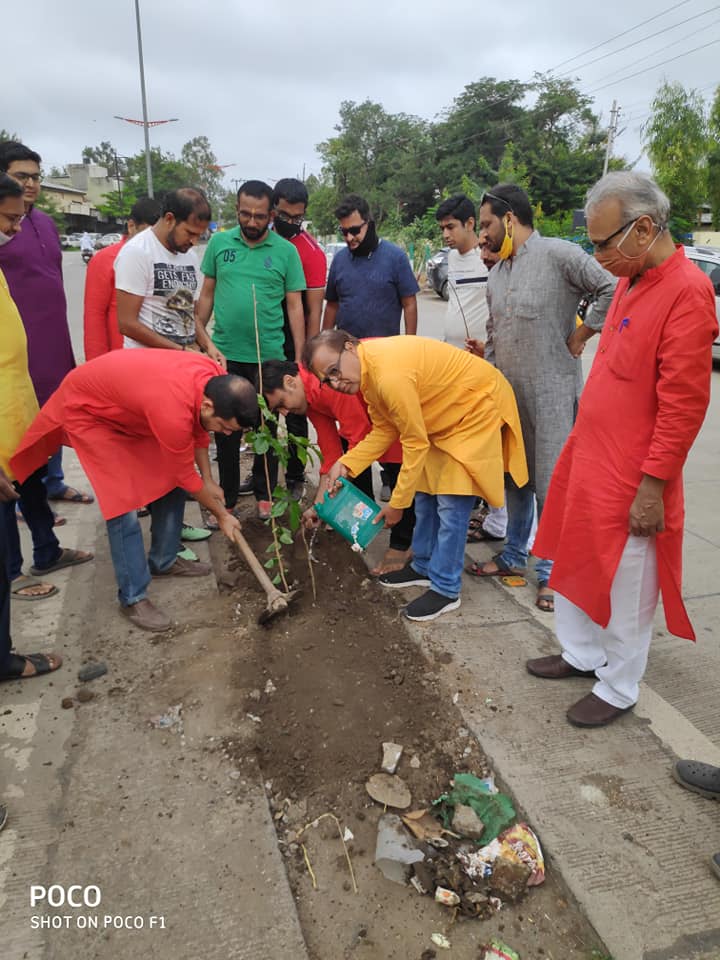
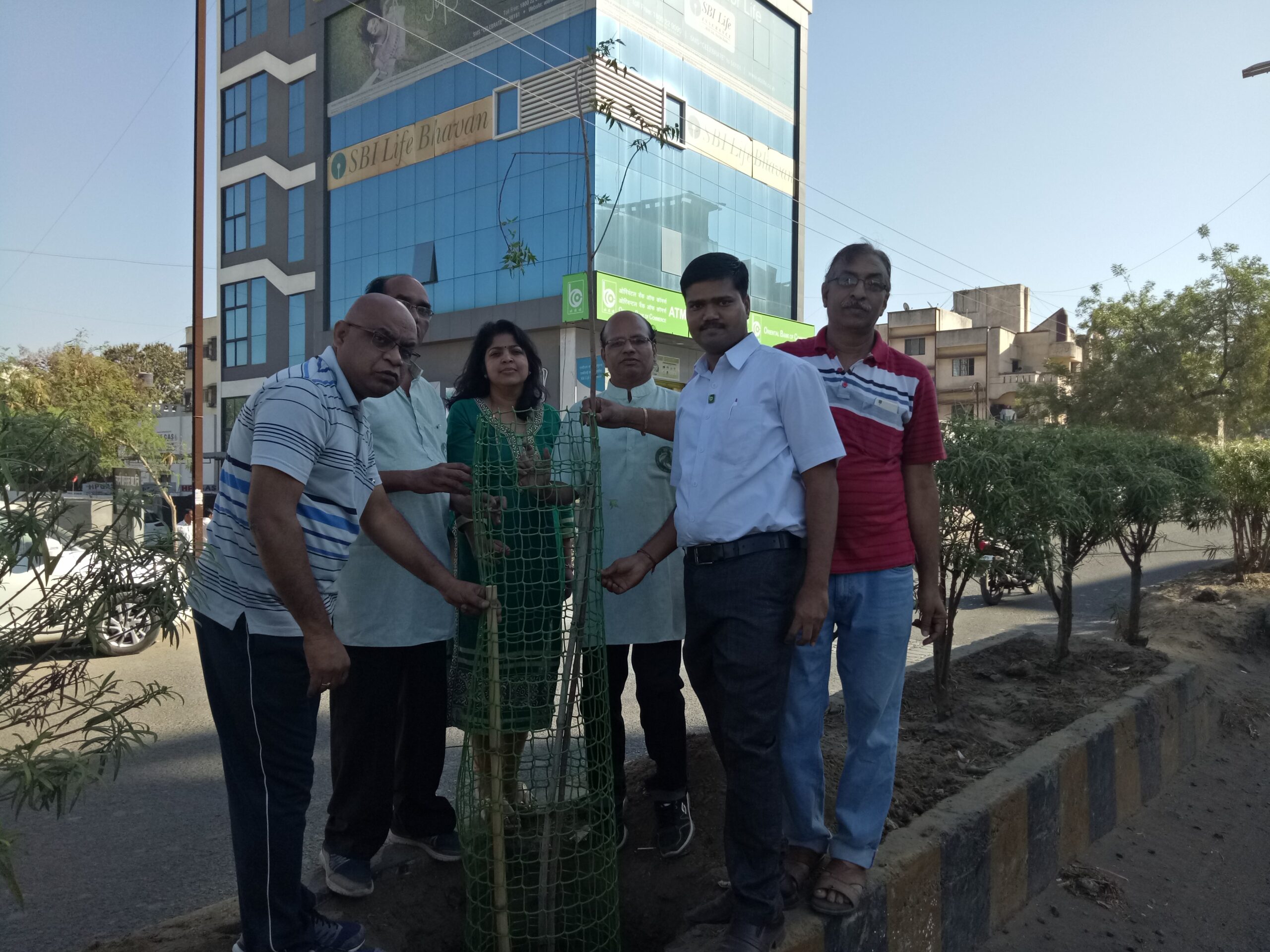
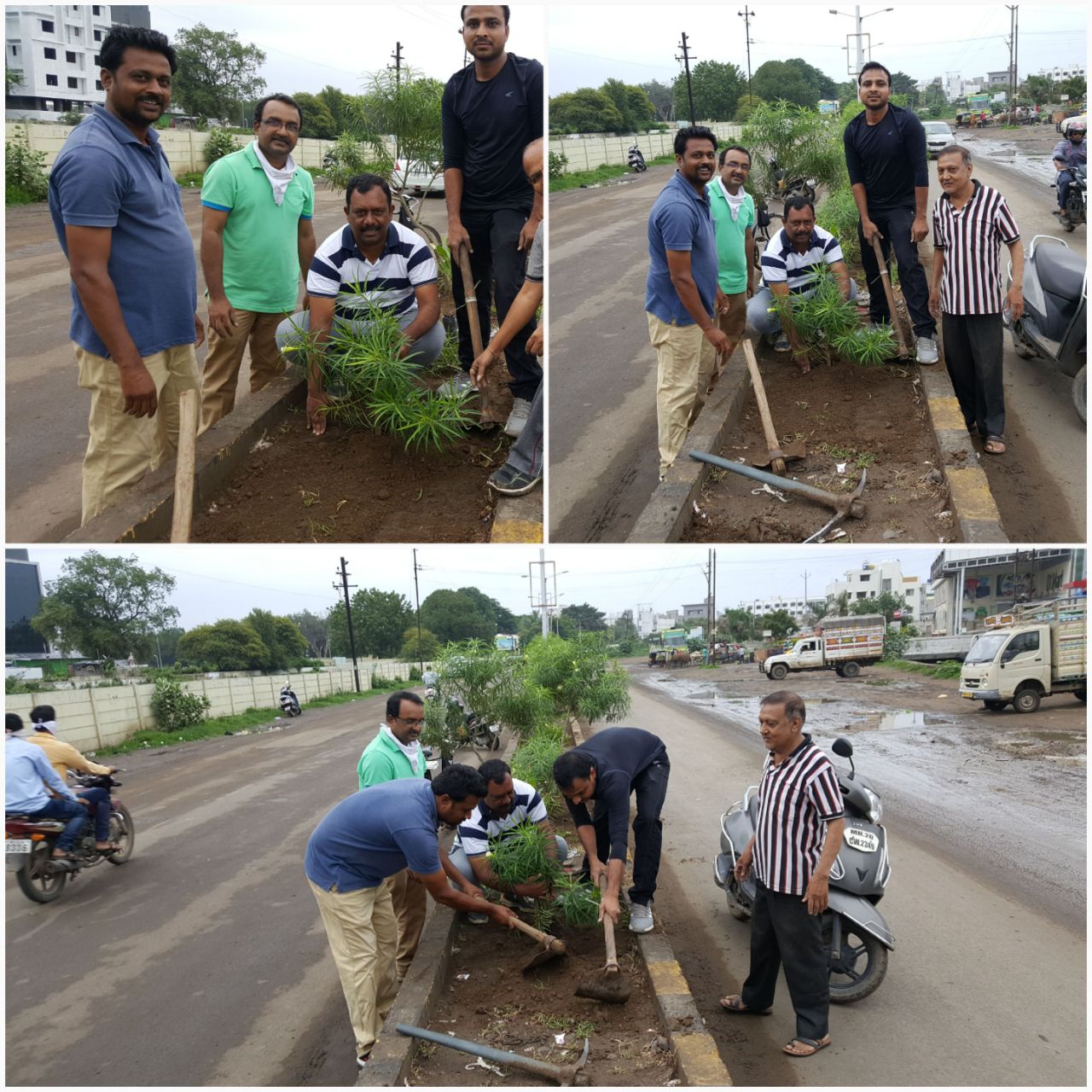
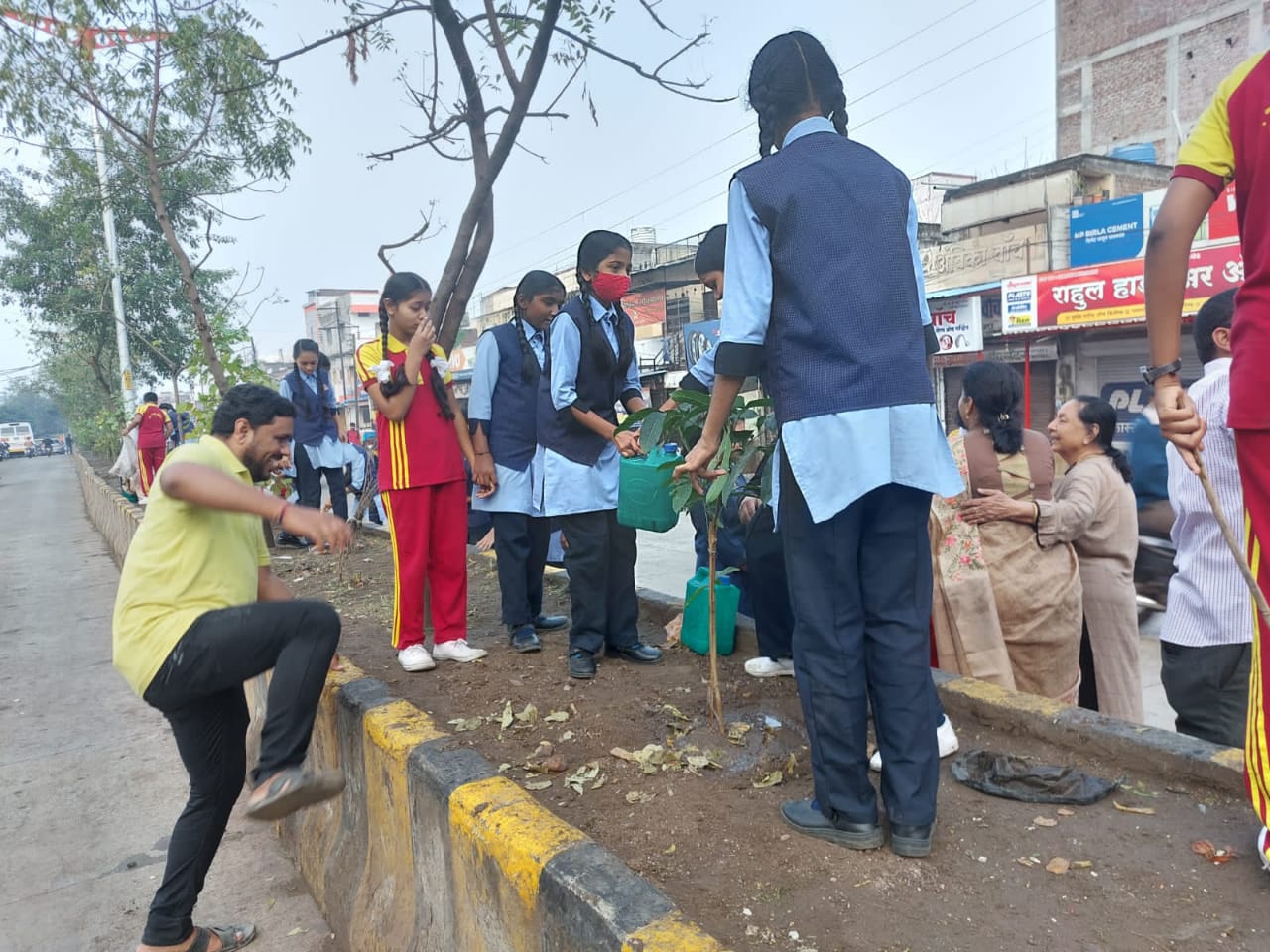
Divider Plantation: In 2018, “WE” pioneered divider plantation in Aurangabad city by planting around 2500 trees on various dividers. The plantation of Indian native trees like Peepal, Neem, Shishum, and Karanj on dividers has many environmental benefits. Such trees act as oxygen generation hubs in the otherwise polluted roads filled with hazardous pollutants like Carbon Dioxide, Sulphur Dioxide, photochemical smog, and suspended particles. The trees cover both sides of roads, reducing the warming effect on roads and preventing global warming. Dividers are ideal places for such plantations as it does not block commercial visibility for businesses. “WE” faced resistance from the authorities citing problems with concrete roads, but they provided strong evidence that Indian native trees have a Tap root system that grows deep into the ground in search of water and does not spread laterally. The roots system expands only towards the source of water and nutrition and there are no chances of roots moving towards the concrete roads, which are already heated by the sunshine. Divider plantation in cities like Pune and Bangalore further supports this evidence.
Government Premises Plantations
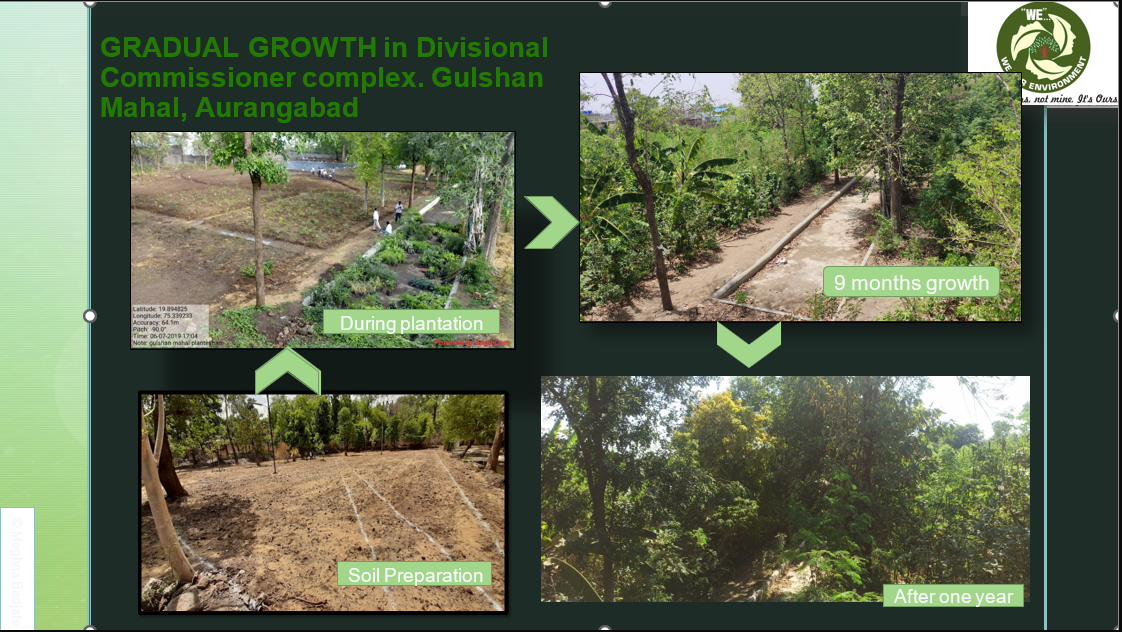
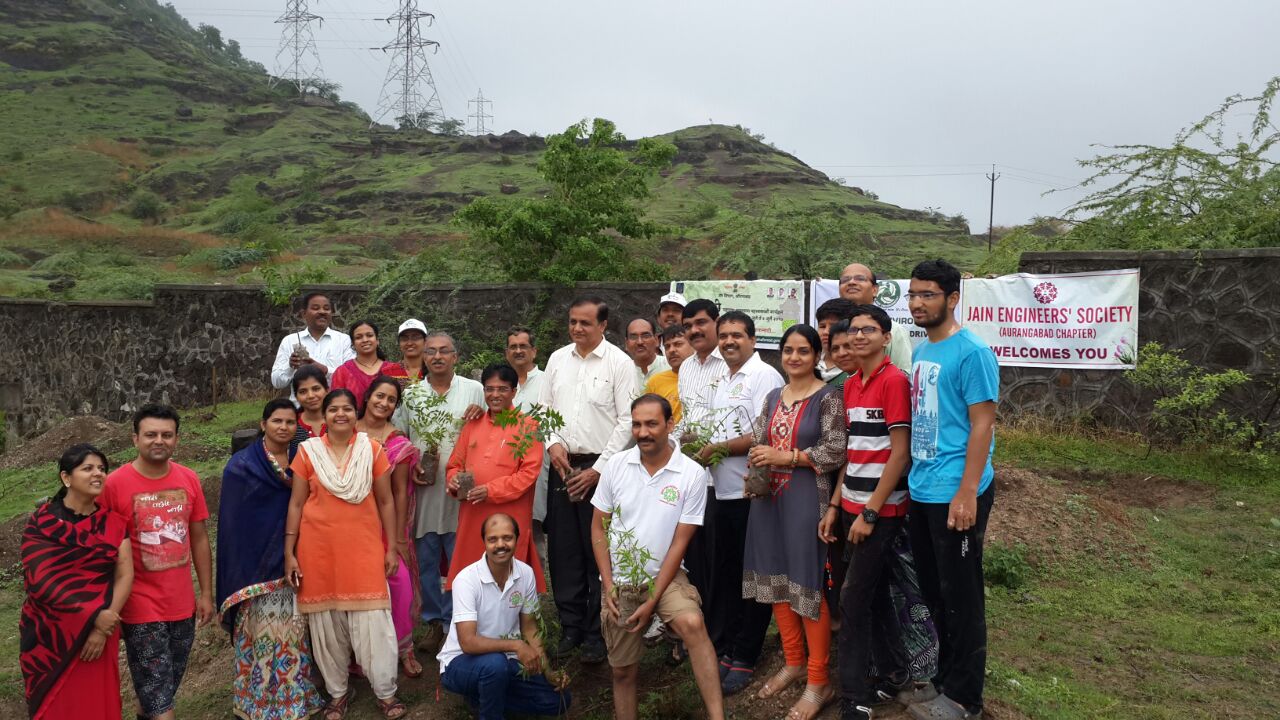
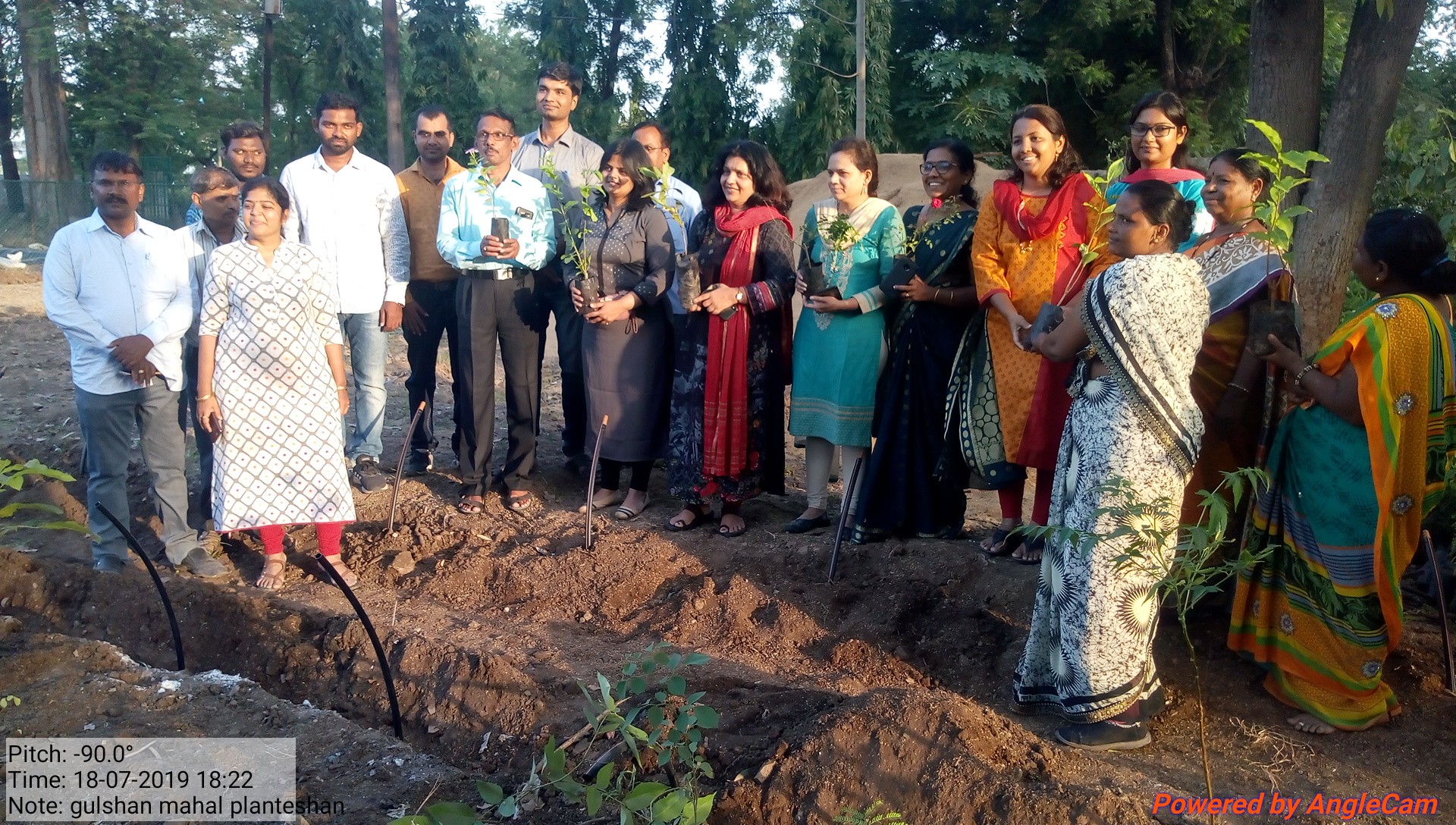
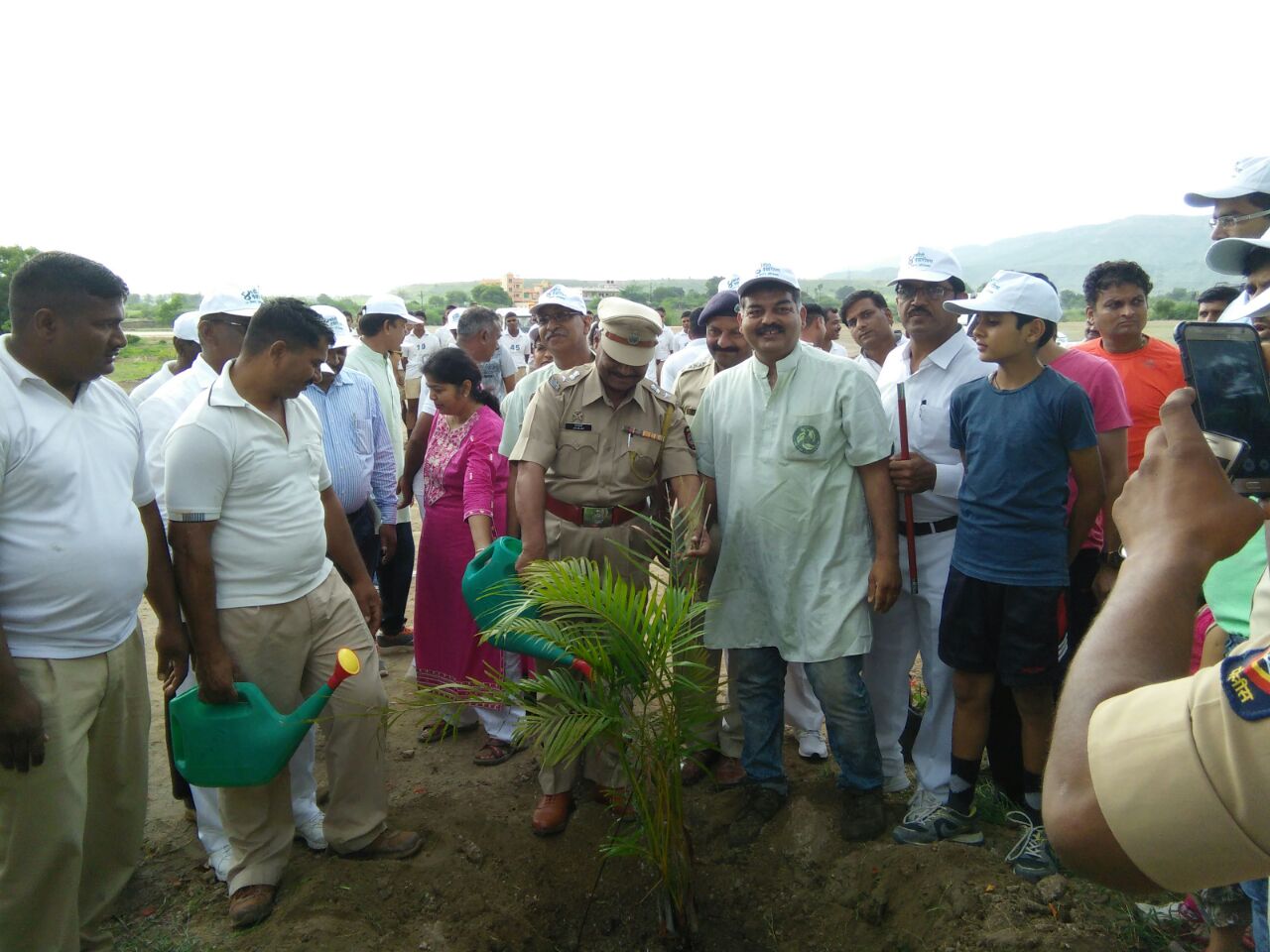
We have worked multiple government organisations like SRPF, Forest department District collectorate, Divisional commissioner office, Government engineering College, Government ITI , Pharmacy College, Divisional sports complex, Chhatrapati Krida sankul, ZP school campuses for making thier premises or other locations greener
Terrace Gardens
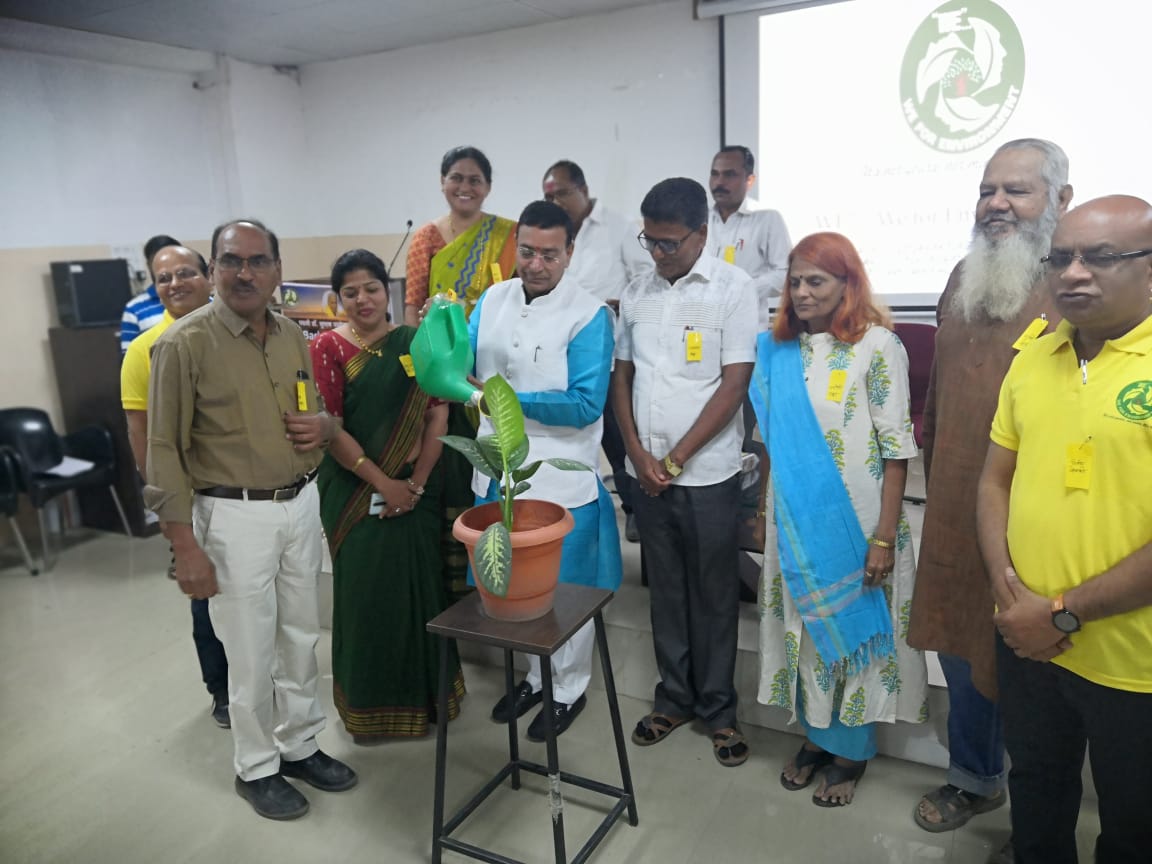
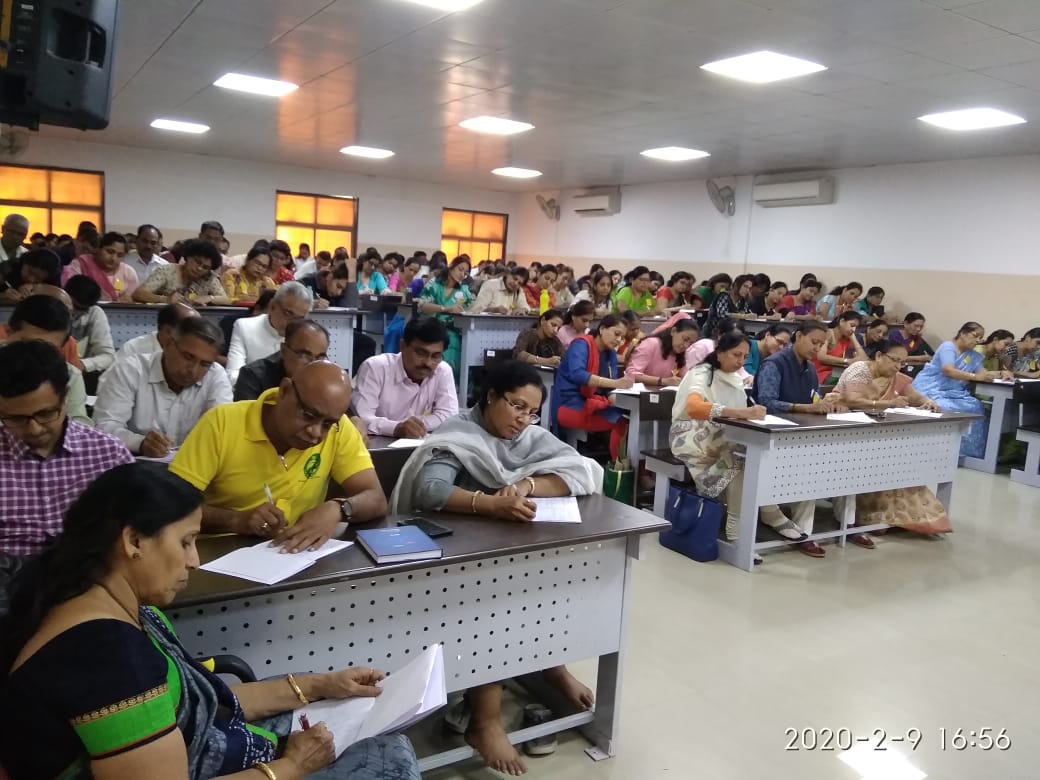
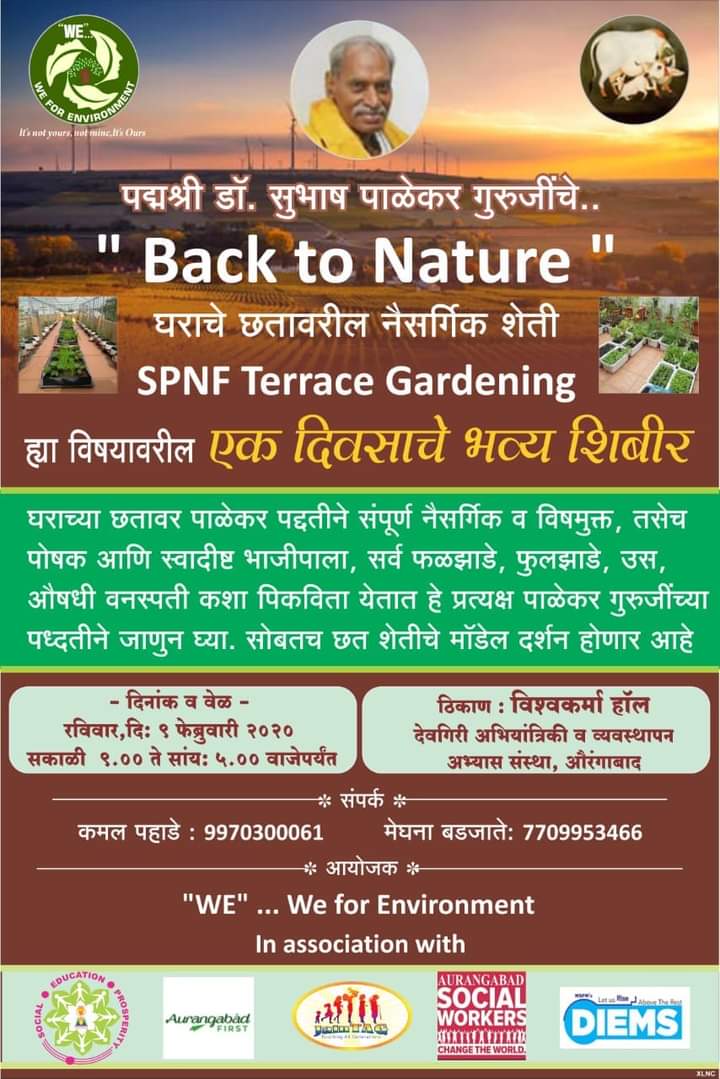
We promotes terrace garden initiative and conduct workshops and visits to encourage people to create their own gardens on rooftops and terraces. The workshop provides training on various aspects of gardening, including selecting the right plants, soil preparation, composting, and pest management. Participants also learn about the benefits of rooftop gardening, such as reducing carbon footprint, promoting biodiversity, and improving air quality. To support the initiative, we provide technical expertise, seeds, routine visits and other necessary resources to participants. By empowering individuals and communities to create their own green spaces, we hope to promote a healthier and more sustainable way of living.
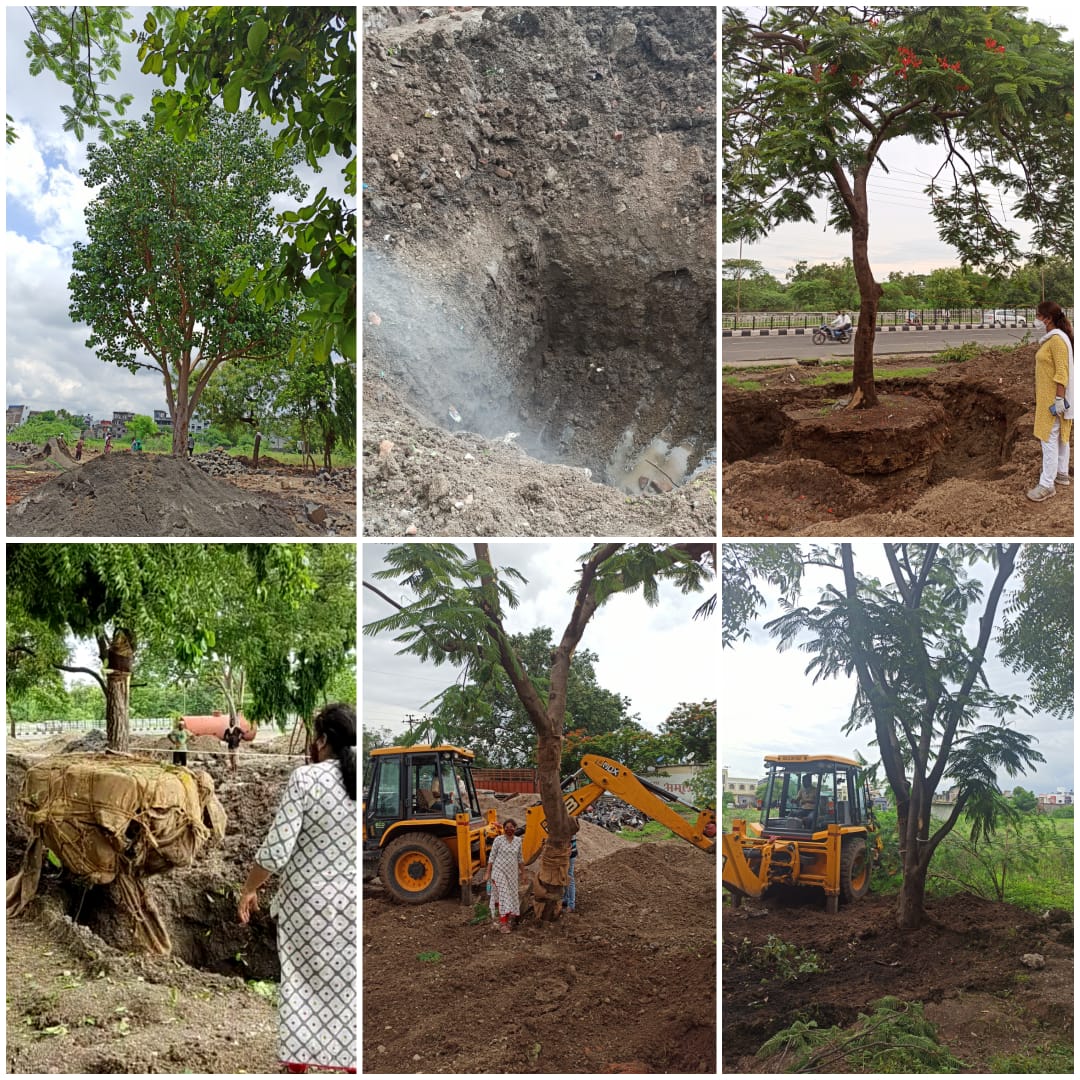
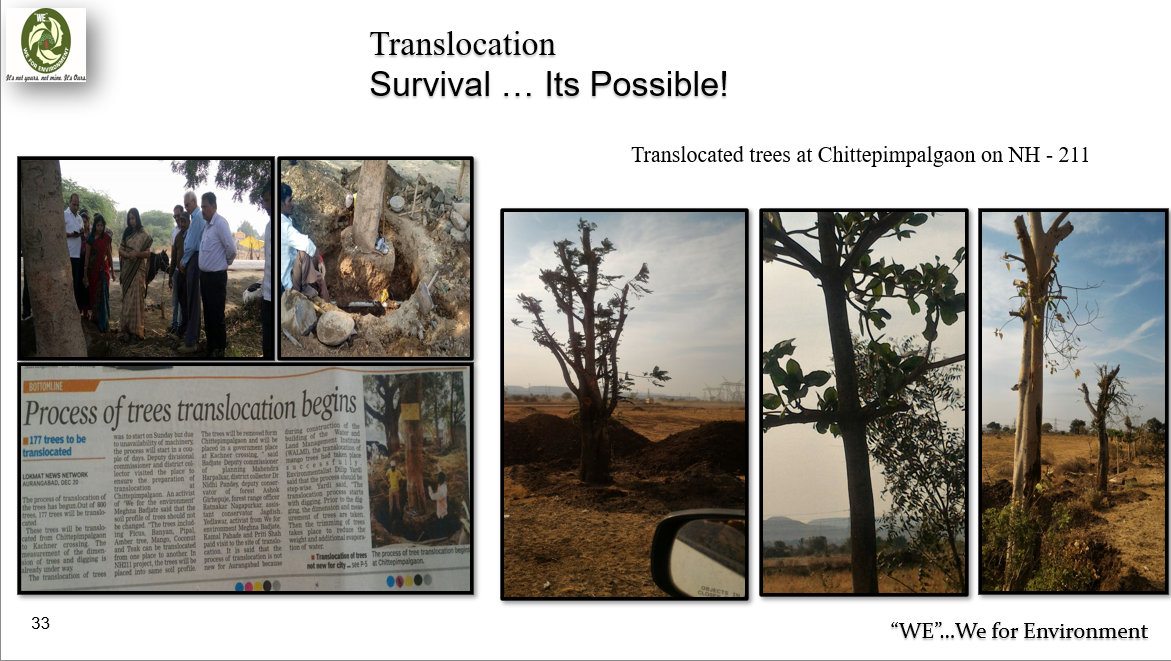
Tree Translocation
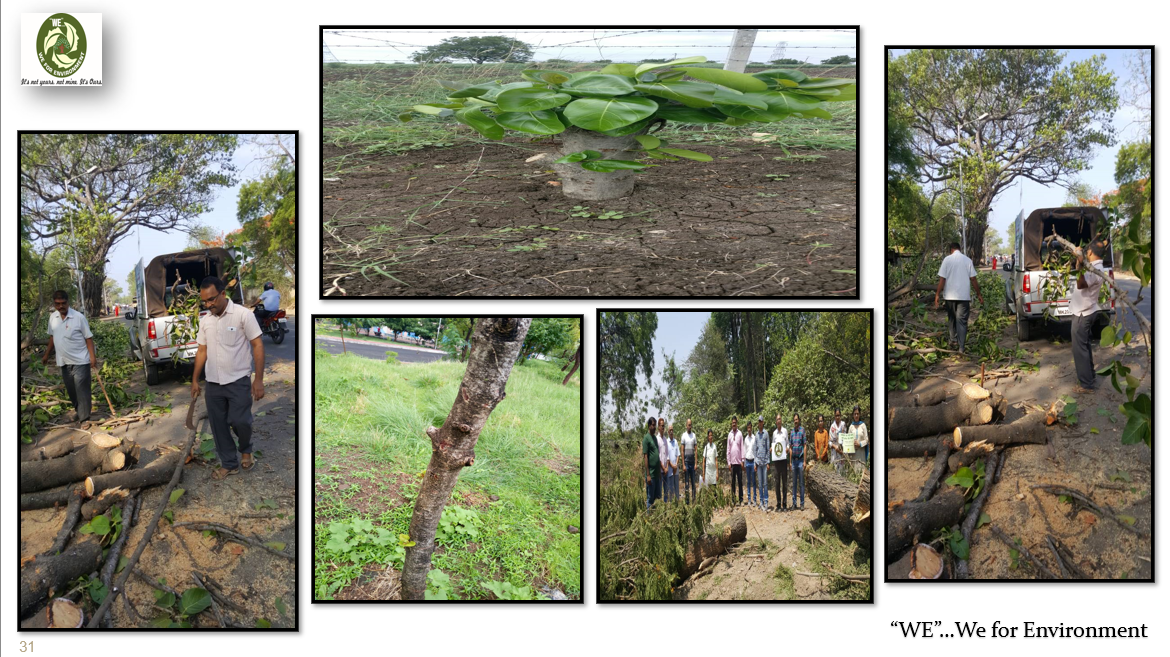
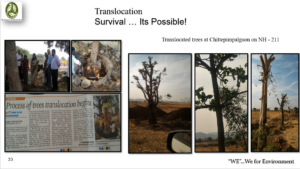
Our NGO has partnered with Government bodies, NHAI, and private premises for a successful tree translocation initiative. The initiative aims to preserve trees that would otherwise be cut down due to construction projects or other reasons. Our team of experts uses specialized techniques and locally available equipment to carefully uproot the trees and transport them to a new location, where they are replanted and nurtured to ensure their survival. This initiative not only helps to preserve the green cover but also promotes biodiversity and improves air quality. Through this partnership, we have successfully supported translocated hundreds of trees, including rare and endangered species. We believe that this initiative sets an example for others to follow and encourages a more environmentally conscious approach to development.
Tree Sustenance Models
o Ownership Drives: “We” members organize Ownership drives twice a day on Sundays and holidays to hand over ownership of trees planted on dividers to nearby establishments. Members gather in groups of 20-30, wear T-shirts and placards for identification, and urge people to sustain and take ownership of the trees. If needed, “We” volunteers provide active support to care for the trees for 6-8 months. Watering requirements are minimal (two liters per tree every 10 days).
This way, “WE’ is able to focus on larger issues of spread of greenery and spreads a positive green message in the society with enhanced public participation. We also save money on maintenance (tankers etc) as people take the ownership voluntarily. Most importantly more people would get associated with us and would help us to carry our message more prominently. We also come to know about the locations, where no ownership has been created and we have to take care of the trees at our own strength.
Such drives have yielded positive results and people were/are maintaining trees at some locations, when we did such an activity in summer. But after the coming of monsoon, people have become relaxed and are required to be re-charged. Core Group discusses and decides further course of action from time to time.
o Tree Parenthood: We prioritize one-year ownership of planted trees, involving owners in planting and motivating maintenance. For trees without owners, we have a one-year survival plan. Local groups receive support for sustainability and members advance to the core group based on commitment.
o Ownership Models: Residents, volunteers, shopkeepers, and hotel owners staying near the trees planted are encouraged to take ownership and maintain them.
o Composting: Members can be encouraged for home composting (for those who have space) using drum model, so that this compost can be used for the trees planted at the group.
o Watering Strategies: Flood watering is ineffective and replaced by drip irrigation that saves up to 60% of water. WE developed a cost-effective system using inverted waste water bottles fixed near the tree to provide water directly to the roots. Adequate mulching support is provided to conserve water.
o Effective Tree Selection: Select effective varieties of trees depending on location and ownership. Plant drought-resistant indigenous varieties on dividers and both sides of roads, and Indian varieties like Jamun, Mango, and Tamarind in close corridors like stadiums and colonies.
o Drip Irrigation: Use drip irrigation as the best and cheapest model wherever human labor is not possible and water availability is possible. Lay the drip underground to avoid damage from squirrels, rodents, and human activity.
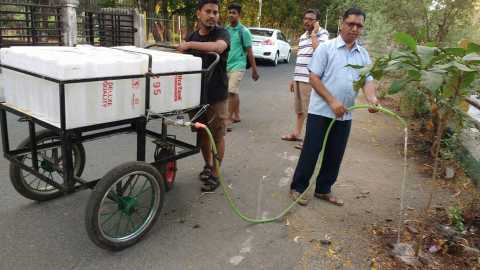
o Donate A Tanker Model: Outsource watering of trees to tanker owners at certain locations under supervision, with a “Donate A Tanker” concept where members donate the expense of at least one tanker for watering trees. Seek donations from donors and large groups to contribute at least one monthly expense of tankers to sustain trees until the next monsoon.
A 5000-liter tanker is sufficient for a distance of 1.5 to 2 Kms and costs 450-500 approximately. Our sustenance members accompany the tanker are get the trees watered. Trees require water for two times a month till March. We work out the tentative number of tankers required per month at all the locations.
Out of the extended WE group, we seek donors ask them to contribute at least one tanker for sustenance of trees. Large groups (Giants, Lions, Doctors, Guru, CMIA etc) contribute for at least 1 monthly expense of tankers. They even send tankers directly with payment to the vendor. This way, we are able to carry on tree sustenance till the next monsoon.
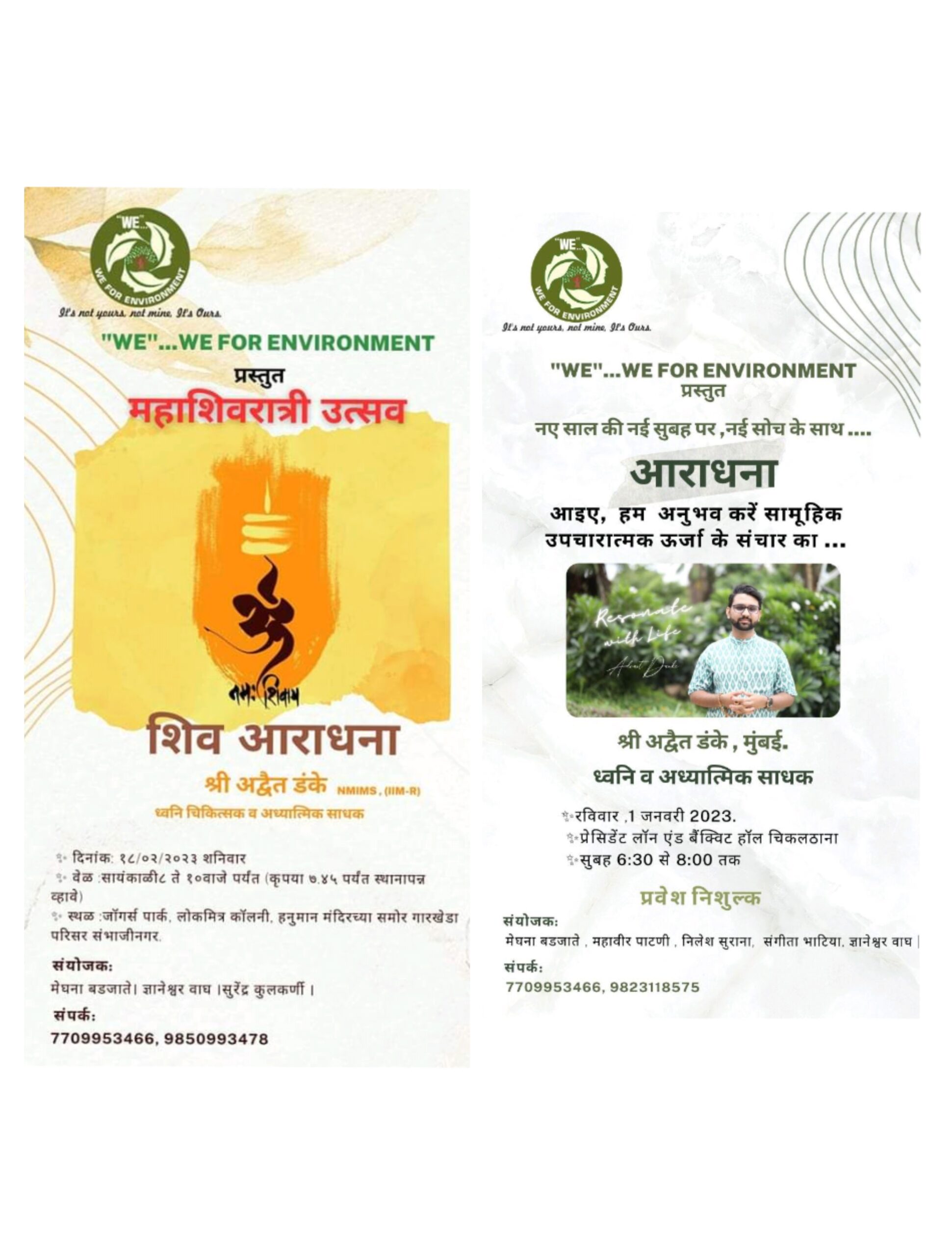
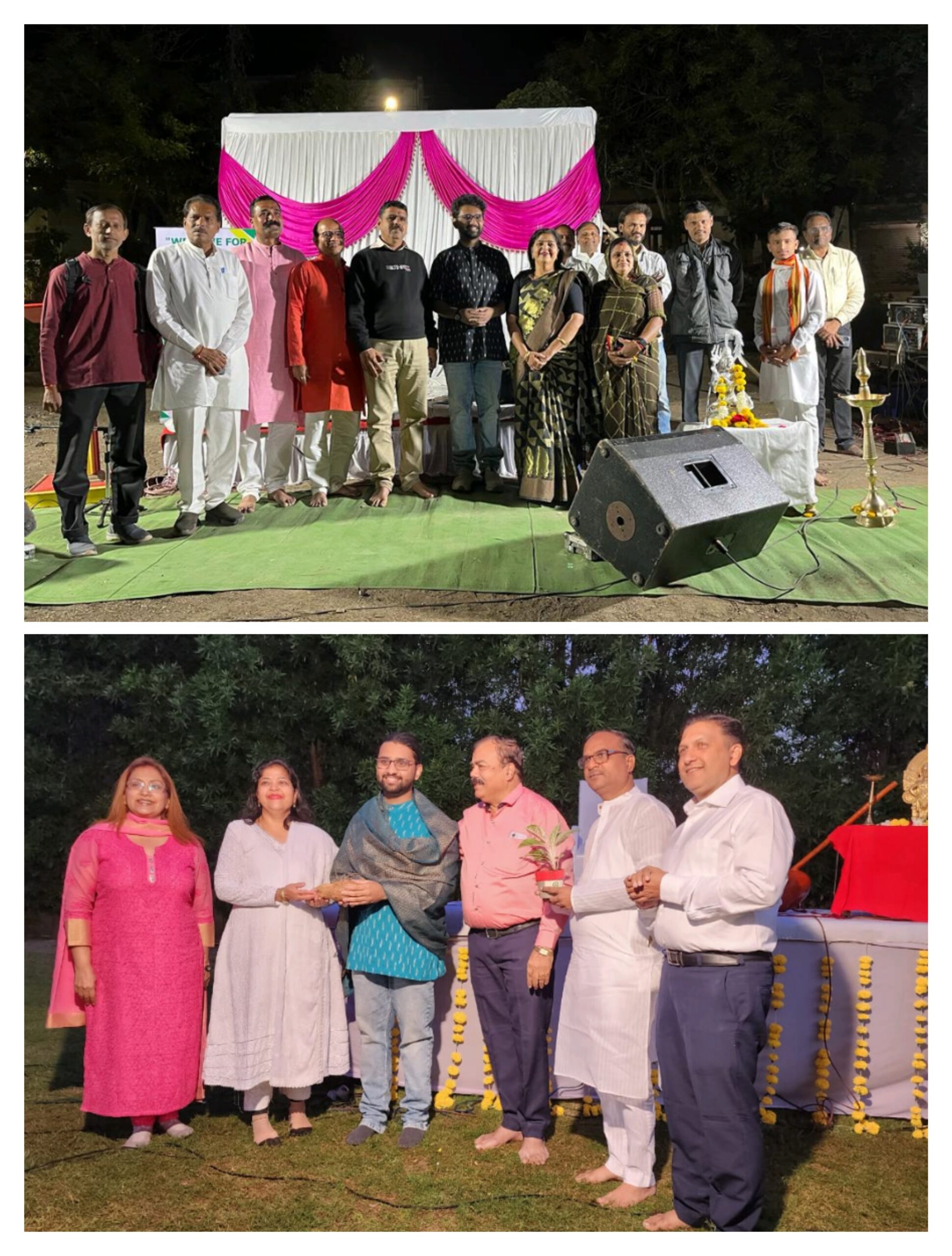
Aradhana Programs
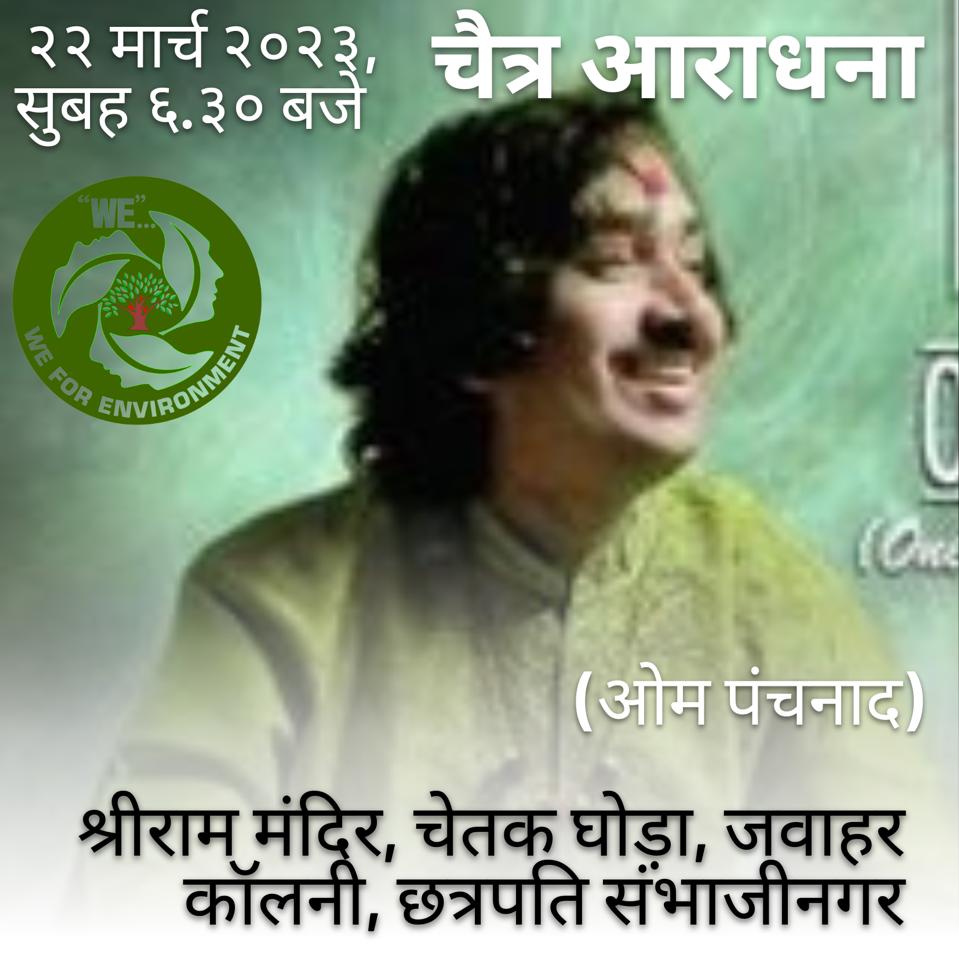
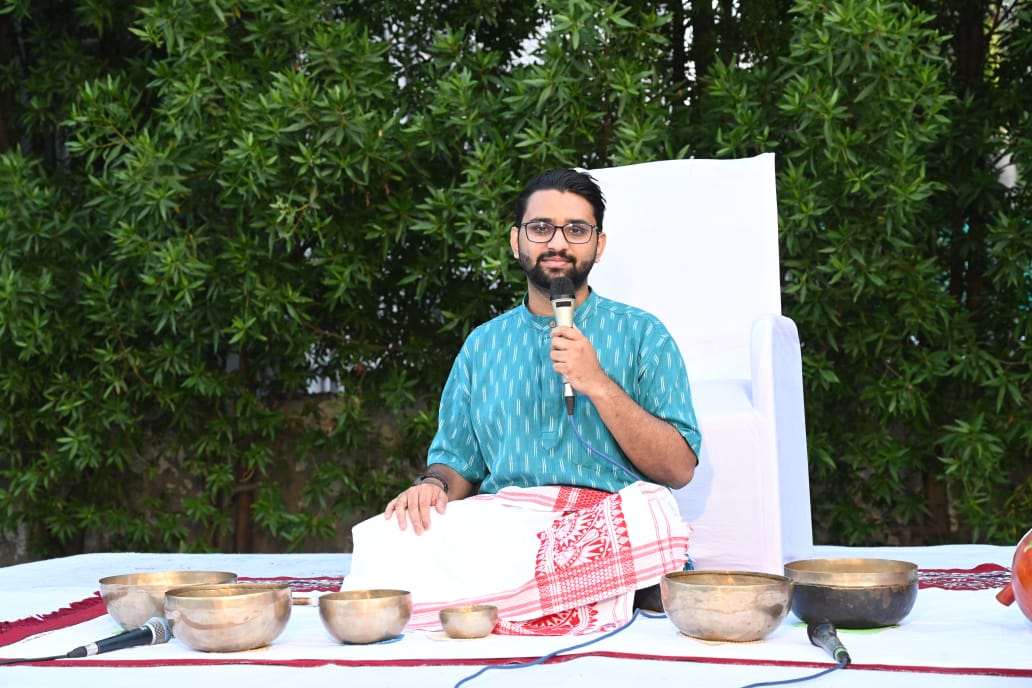
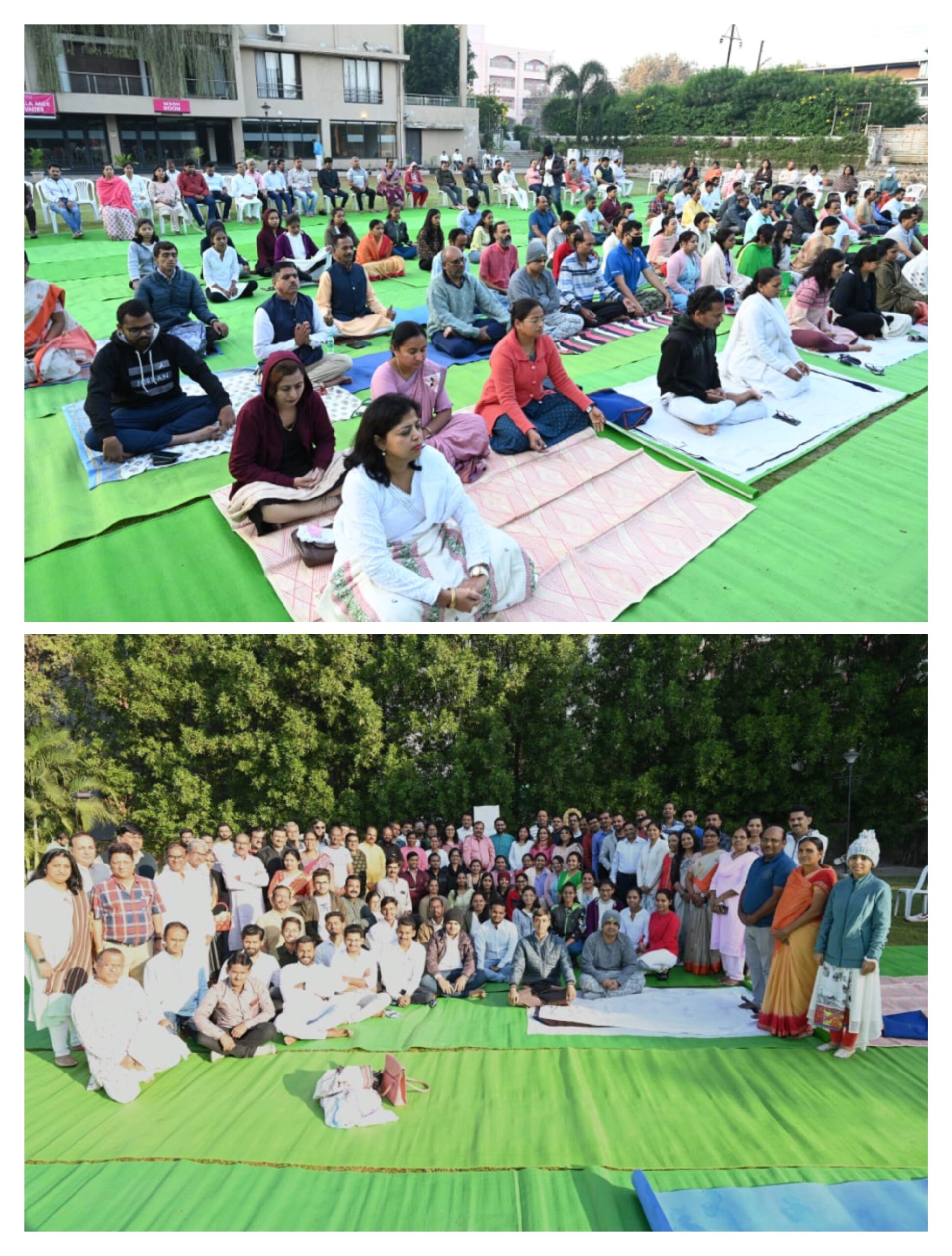
“WE” have started to new project “Aradhana”.. “WE” will contribute to the social Environment through various means of Sound therapy, frequency healing and group dynamics to deal with stress and anxiety in the daily life challenges.
Till now we have conducted two programs and “Naad Aradhana”on 1st Jan and “Shiv Aradhana” on 18 Feb to celebrate Mahashivratri.
Empowerment And Awareness
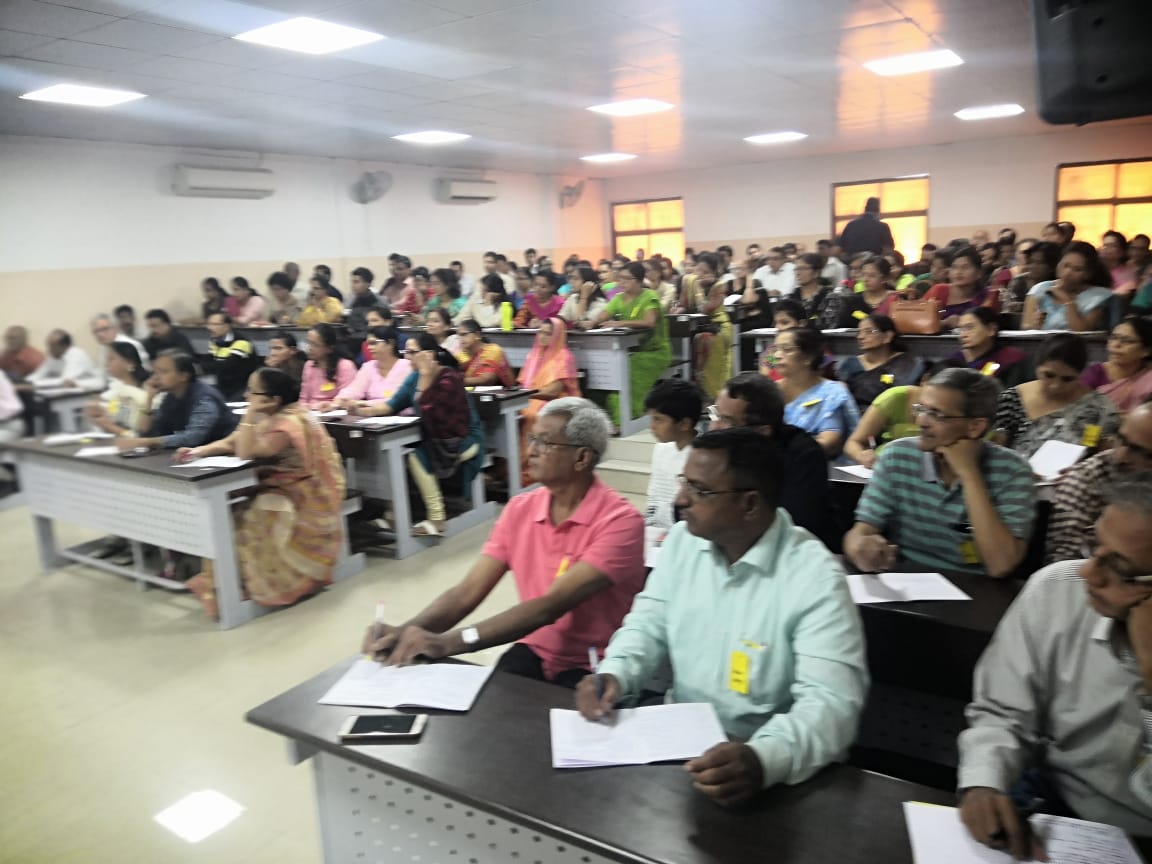
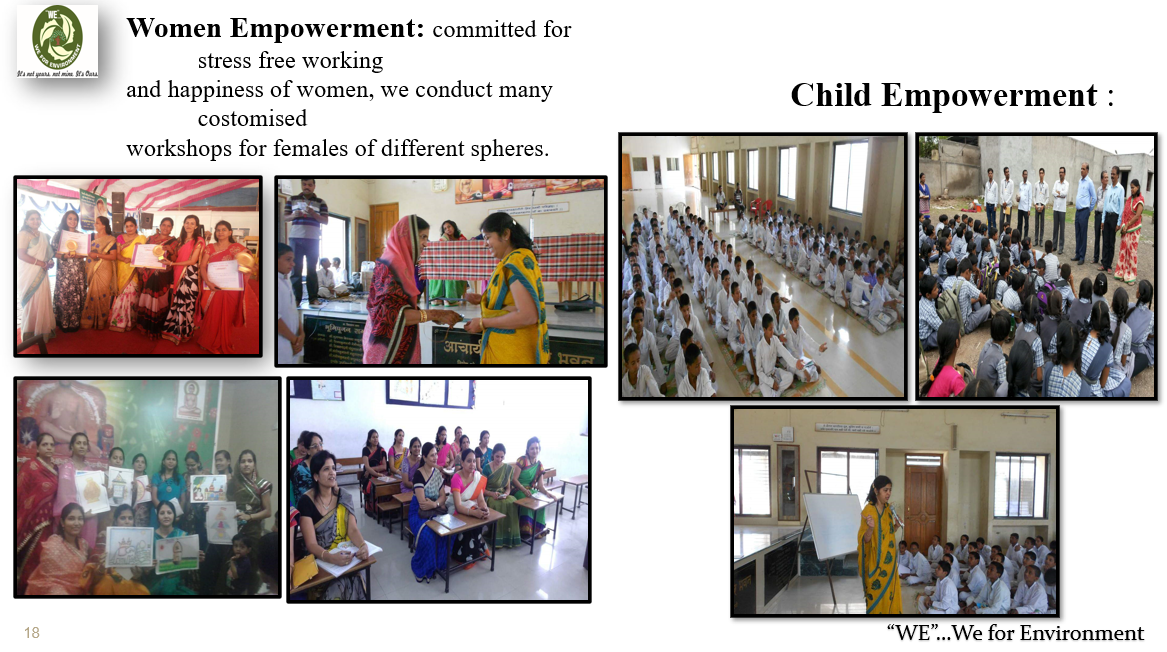
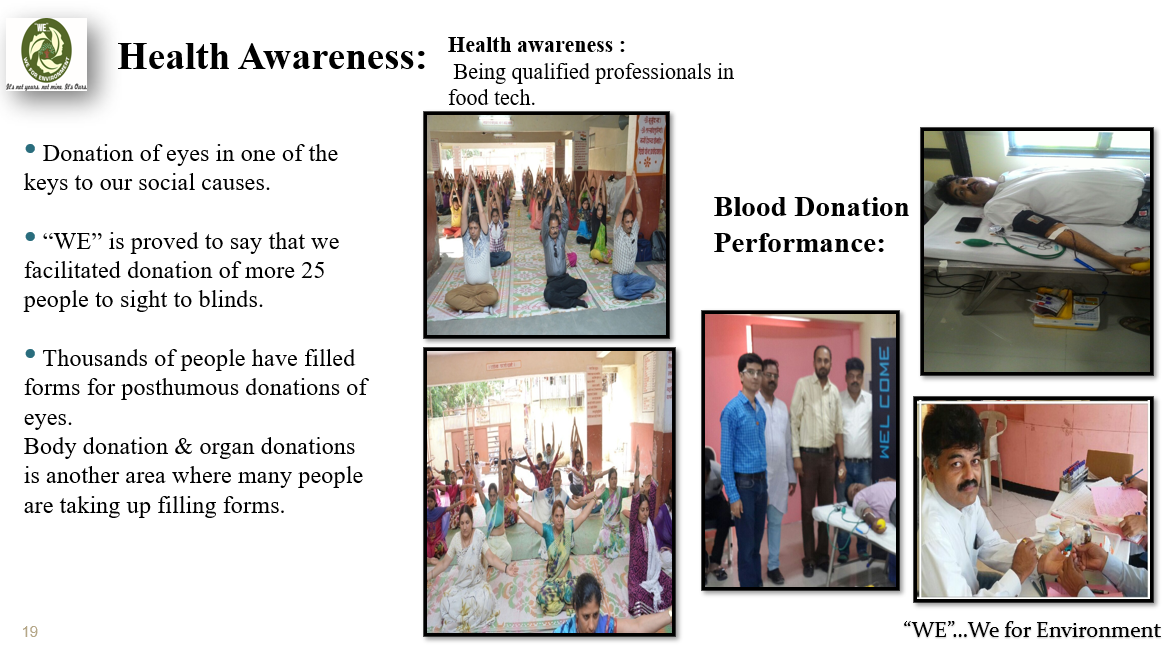
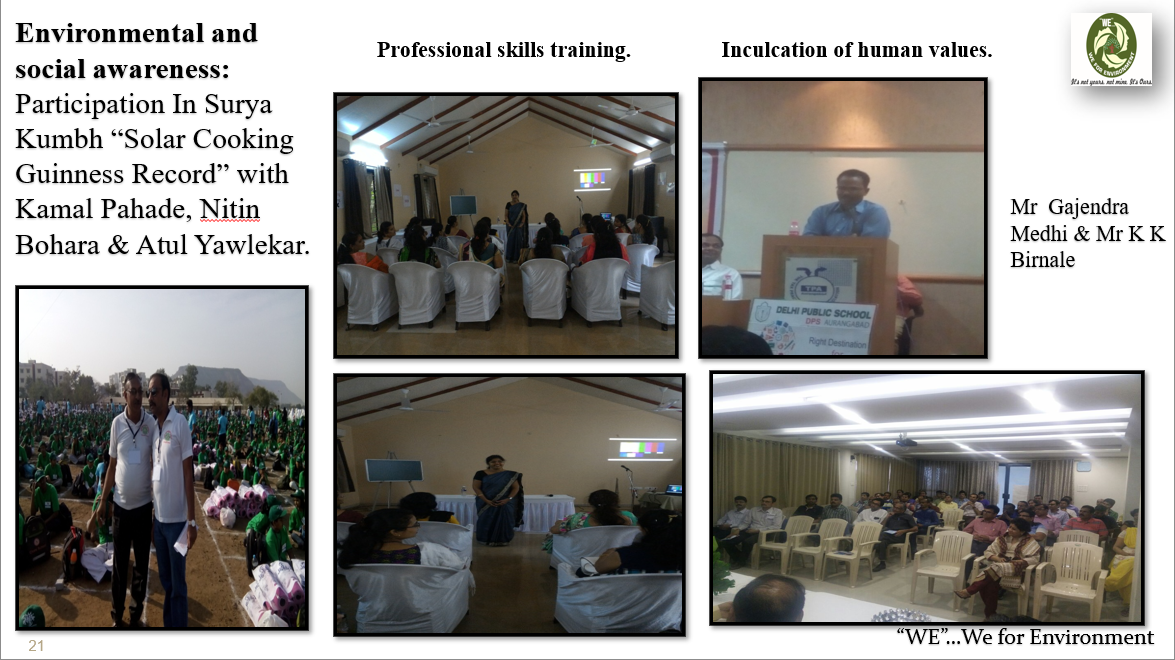
In our empowerment and awareness programs, we generally conduct talks and workshops for school children, college students, societies, organizations, and public gatherings to raise awareness about the different effects of climate change, the severity of air pollution, the effects of pollution on human health, the necessity of pure air, and the requirement of a better environment for human dwelling.
Environment Watchdog
The group members maintain a strict vigil on the planted trees at all the locations. Any attempt to damage trees is taken seriously with the concerned authorities. In one such incident, the burning of the group planted trees along with the grass in the Divisional Sports complex, Aurangabad was strictly condemned by the group. The group organized a dharna and demonstration in the stadium premises which received widespread support of nature lovers. The stadium authorities undertook widespread redressal activities with and assurance to avoid such incidences in the future.
Webinars
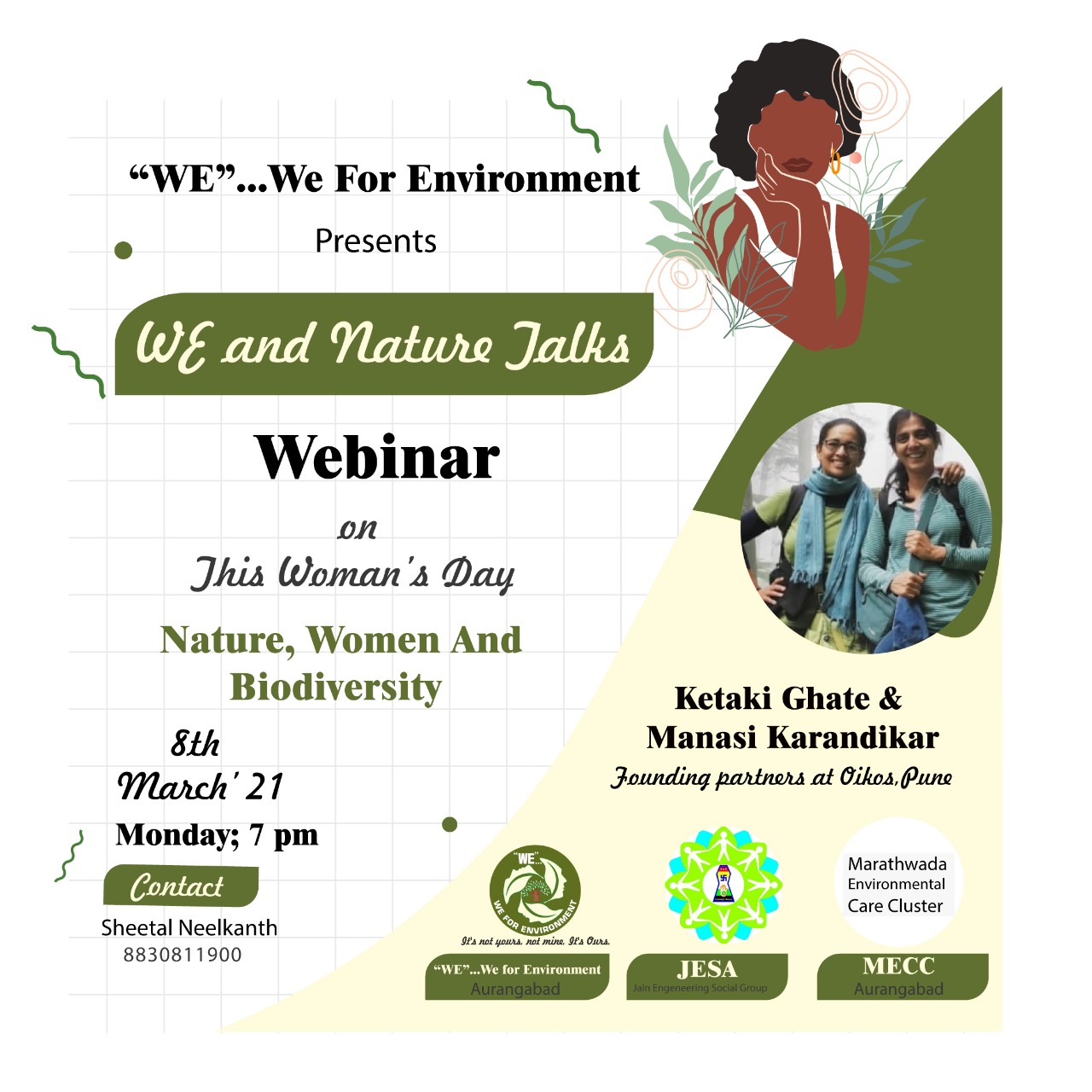
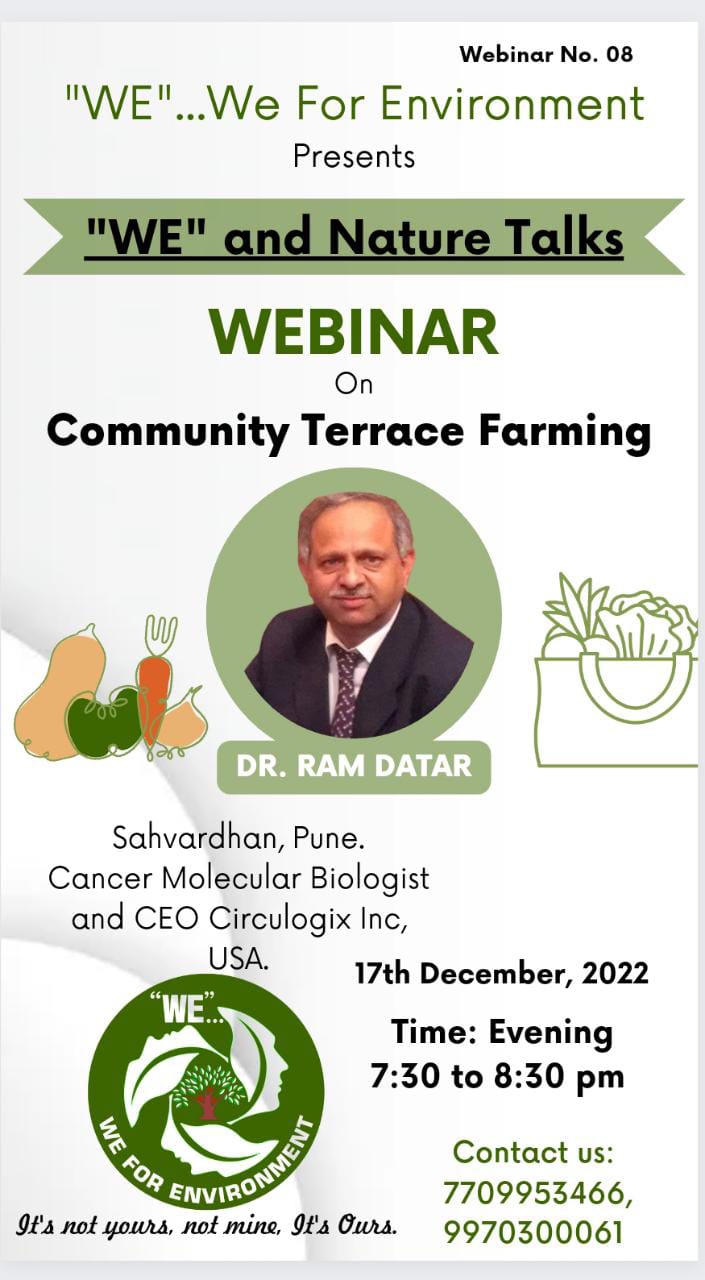
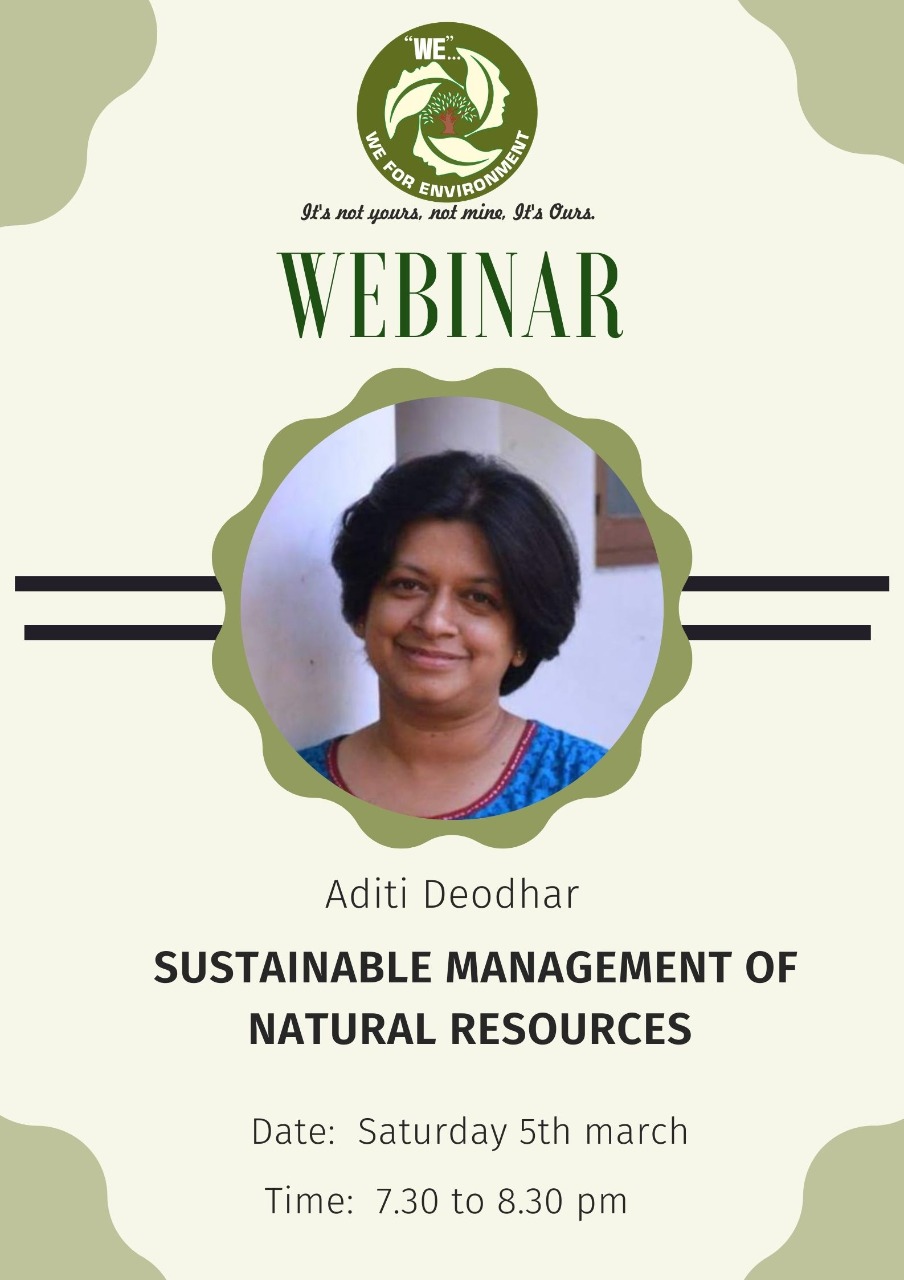
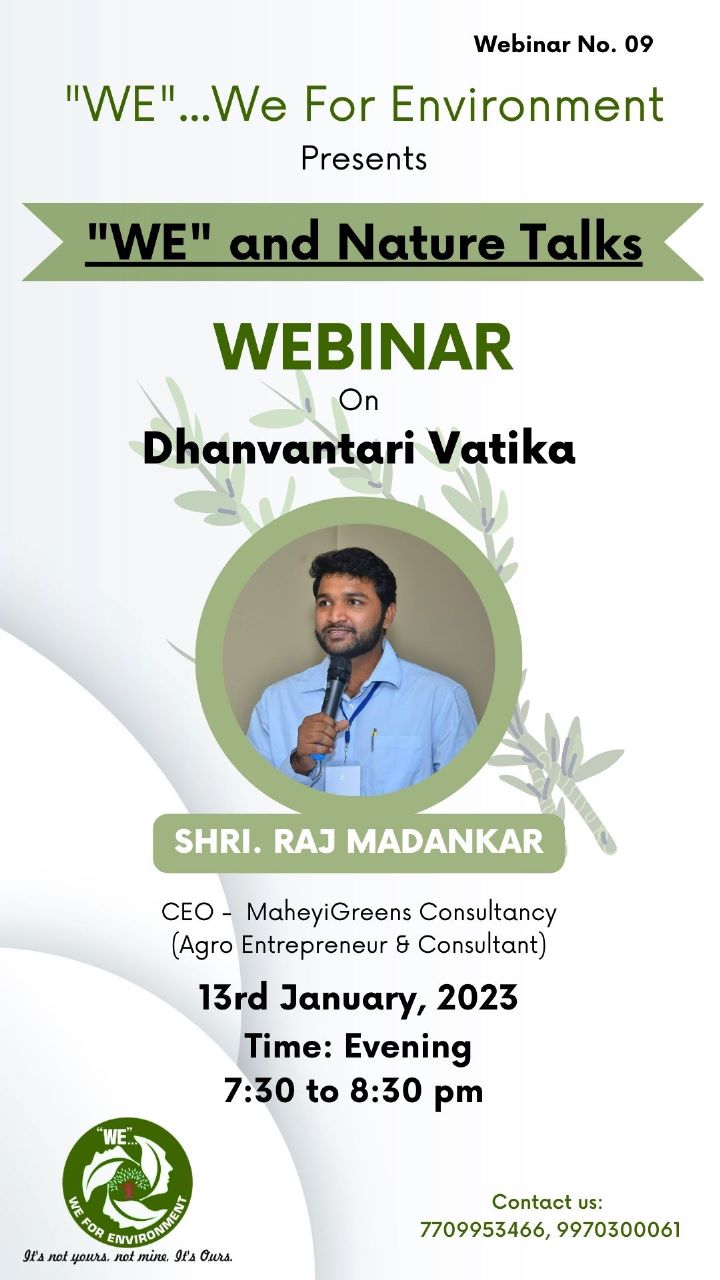
Our webinar series called “We and nature talks” on environmental causes help us to connect with leaders from distant places. We choose eminent speakers for topics that can enhance knowledge and practicability. A successful webinar helps us to increase our visibility, engagement with audience, and promote our mission.
Workshops
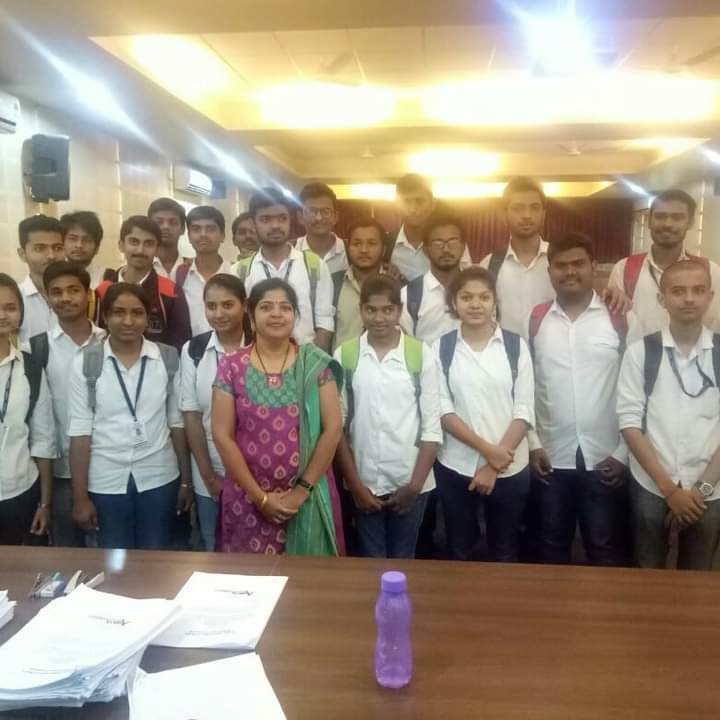
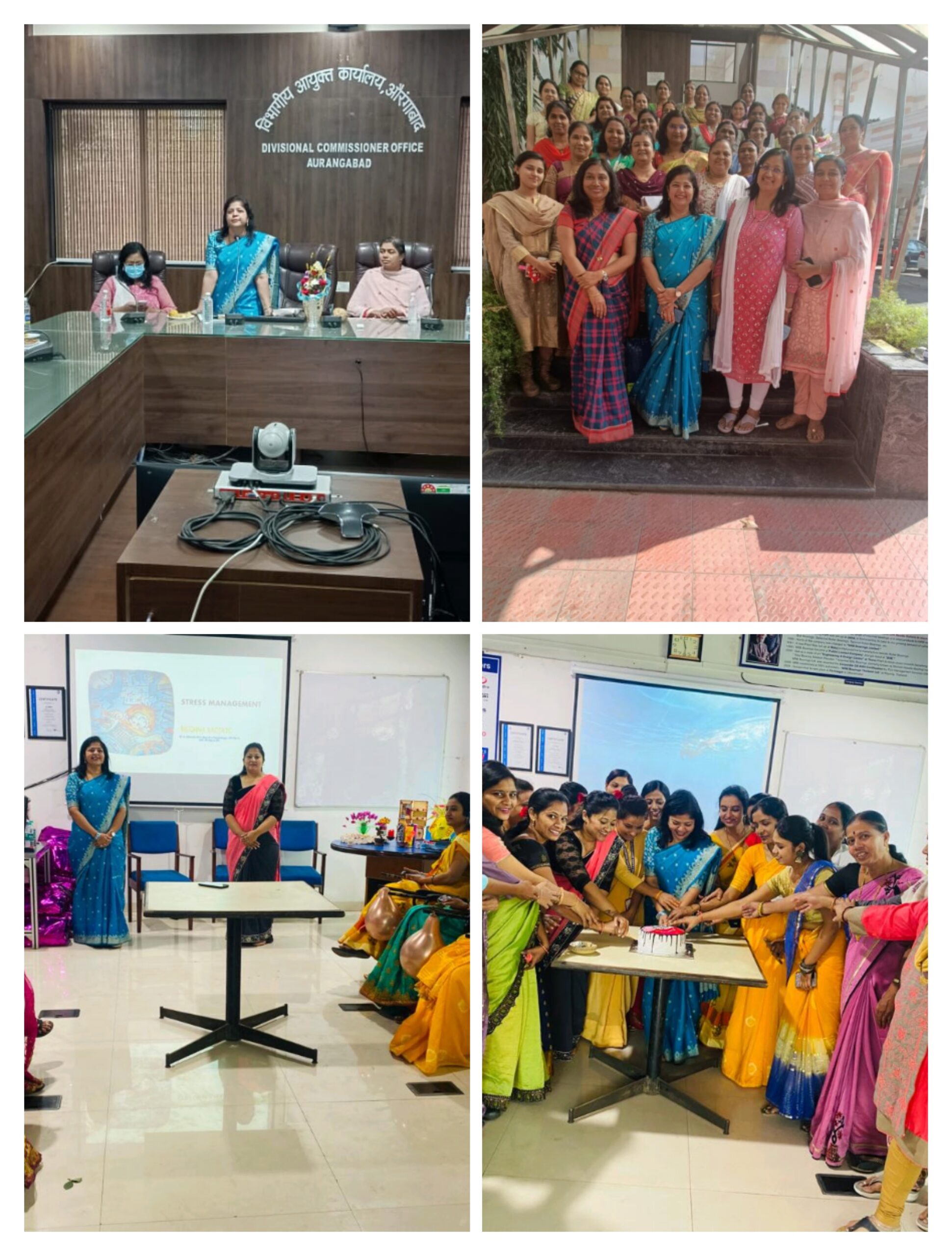
We conduct talks and workshops for school children, college students, societies, organizations, and public gatherings to raise awareness about the different effects of climate change, the severity of air pollution, the effects of pollution on human health, the necessity of pure air, and the requirement of a better environment for human dwelling.